

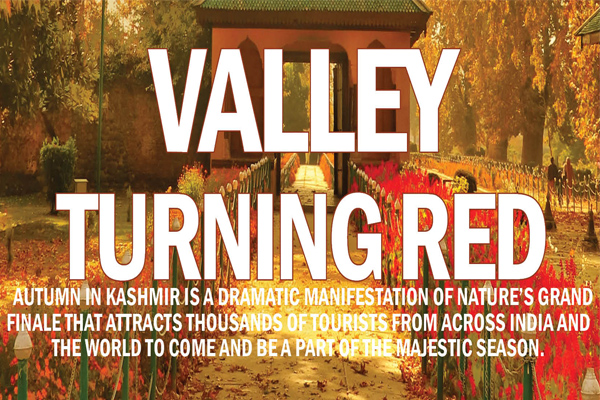
Autumn in Kashmir is a dramatic manifestation of nature’s grand finale that attracts thousands of tourists from across India and the world to come and be a part of the majestic season.
Autumn in Kashmir, locally known as ‘Harud,’ transforms the valley into a vibrant canvas of red, orange, and yellow, attracting tourists to the Mughal gardens.
Kashmir, the crown jewel of India, is basking in the enchanting glow of autumn, drawing tourists from far and wide to witness its mesmerizing beauty. The mesmerizing autumn season brings cheer to tourists in Kashmir. The valley’s famed Mughal gardens, adorned with Chinar trees resplendent in their golden and brownish hues, have become a haven for nature lovers seeking a respite from the hustle and bustle of city life. Tourists visit Kashmir Valley round the year in all seasons, but the autumn season has its own different charm that always attracts tourists.
The autumn season, locally known as “Harud,” transforms Kashmir into a canvas painted in vibrant shades of red, orange, and yellow. The Chinar trees, with their long, slender branches reaching towards the sky, stand as majestic sentinels, their leaves shimmering like a thousand coins in the sunlight. Autumn is considered one of the most beautiful seasons, which makes the atmosphere so beautiful and increases the beauty of Chinese trees everywhere in the valley, including the Mughal gardens.
During autumn, due to the golden and brownish colour of leaves, Chinar trees give off a very unique and extremely beautiful look that attracts everyone, especially tourists on a large scale. That’s why during this autumn season, tourists from different places always prefer to visit Mughal gardens, including Nishat and Shalimar, where the brownish and dazzling leaves of long Chinese trees increase the beauty of the gardens.
Presently, good numbers of tourists are coming and they are spending good time in Mughal gardens and making memorable albums under the shadows of long-heeled heritage Chinar trees. Autumn is called “Harud” in the local language and during this season, the maple leaves of majestic Chinar trees turn gold brown from green which always attracts nature lovers both locals and tourists.
Tourists, captivated by the valley’s breathtaking scenery, are flocking to the Mughal gardens, including Nishat and Shalimar, to capture the essence of this ephemeral beauty. The gardens, meticulously designed with fountains, pavilions, and pathways, provide a picturesque backdrop for unforgettable memories.
The Chinar (Maple) trees in Kashmir look as if they have been decorated with layers of colours. The visuals that tourists have seen only in Bollywood films.
The world-famous Mughal gardens of Kashmir have a red carpet spread of these Chinar tree leaves with the background of Zabarwan Hills.
The Nishat Garden, Shalimar Bagh, Naseem Bagh, and Chinar Bagh are witnessing a huge rush of tourists enjoying these beautiful visuals and taking photos in these breathtakingly beautiful locations.
Some of the tourists visiting have just read about Autumn and have never seen it. The rest of India does not have 4 seasons like the Kashmir Valley. The government has also announced special festivals for the tourists coming to the Valley during the Autumn season. While the Mughal gardens in the Valley are seeing a steep rise in the footfall specially to see the Chinar trees.
Kashmir Valley has been witnessing a record-breaking number of tourists in the last few years. This year all the previous records have been broken with over 1.88 crores visiting the Valley in the first ten months.
Going towards the hilly areas one can see the maize and walnut trees with their fruit getting ready to be harvested. It is also a time when after a day’s satisfactory harvesting, the inhabitants sit together and sip a cup of steaming Kahwa or the nun chai along with the gossip of the day with a makkaye chot (corn bread) or Toumle chot (bread from rice flour). A background of melodious sound of flowing streams with water splashing over small pebbles, and intermittent noise from insects and crickets, is music to all ears. Going towards apple producing areas of Sopore in North Kashmir or Shopian in South Kashmir, one can see cartons of apple being transported to various parts of the country. The previous practice of buying from mandis is being rapidly replaced by merchants coming from all over the country directly to orchards and booking the orders.
The other activity after the harvesting is over is to prepare for the coming winter are: stockpiling essentials, pruning trees, covering water pipes with cloth and foam to prevent freezing. Another important task is getting Kangris (an earthen pot woven around with wicker; later filled with hot embers kept under the traditional winter clothing called pheran). Finally taking out and cleaning pherans to keep warm during the forthcoming freezing winters. The practice of drying the vegetables and fish in the form of garlands to be consumed during winters is still prevalent in the countryside and smaller towns. This is despite the fact that fresh vegetables are available throughout the year because of improved transportation even during the difficult winter months. These dried vegetables “Haukhe Syun” (turnip, bottle gourds, brinjal and tomatoe), and various sizes of dried and smoked fish called “Hogada”, although originally meant for tiding over the difficult months, are considered delicacies now.
Autumn brings the fond memories of the year spent and it is time to pay gratitude to the Almighty for all the favours bestowed on us. It is also time to look forward for a new and hopefully an exciting year. It is undoubtedly the best of all seasons – the “Golden months of our lovely smiling Kashmir”.
