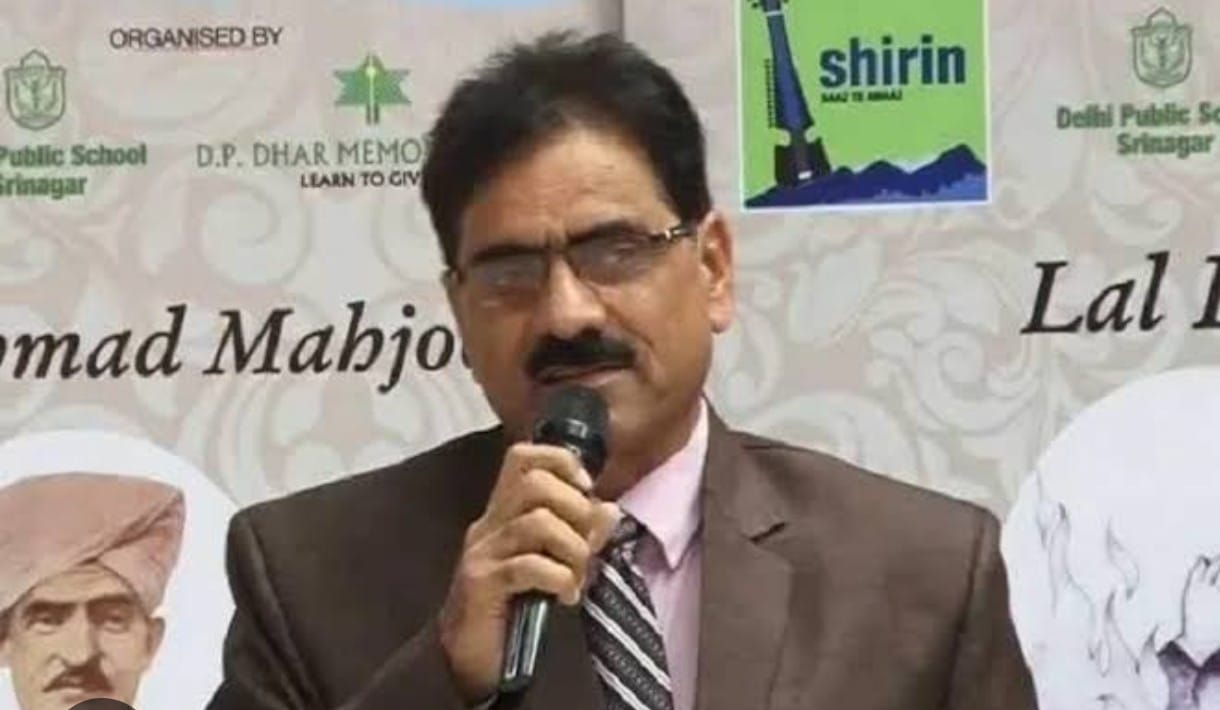
By Rafeeq Masoodi
As I sit down to pen this tribute, memories of a remarkable individual flood my mind. It’s a story of friendship, shared passion, and dedication to promoting the Kashmiri language and literature. My journey with this extraordinary person began in 1973, at the Adbi Markaz Kamraz (AMK) Annual Conference in Bandipora, where I first met the young man with long hair and bell-bottom pants.
Introduced to him by my teacher, the late Prof. Mashal Sultanpuri, I was struck by his infectious enthusiasm and passion for Kashmiri language and literature. Little did I know that this chance encounter would mark the beginning of a lifelong friendship and collaboration.
As fate would have it, we lost touch when I left for Jawaharlal Nehru University (JNU) in Delhi. However, our paths crossed again in 1983, when I returned to Kashmir and began working with Aftaab Daily. It was then that I reconnected with my friend, who had by now grown into a promising neo-poet.
Our subsequent meetings, including one at the Shahidganj Cultural Academy office, further solidified our bond. It was during one such meeting that my friend, the late Kamil, asked me to translate Hindi poetry and prose into Kashmiri. This request sparked a chain of events that would change the trajectory of our lives.
During my tenure as Director of Commercial Service at Radio Kashmir, my friend would frequently visit me to discuss language, literature, and their evaluation. Our conversations were always enriching, and I vividly remember one particular exchange. When I lamented that Sheikh ul Alam’s works were not reaching the hearts of all Kashmiri poetry lovers, my friend responded with characteristic enthusiasm: “Why don’t you start a biography of Sheikh in colloquial language?”
This suggestion led to the creation of “Turuk Hai Tchuk Panai Zaan,” a weekly spoken word program that aired every Sunday at 8 am. Produced and presented by GR Akhoon, this program ran for many years, spreading the beauty of Kashmiri literature to a wider audience.
My friend’s passion for promoting the Kashmiri language knew no bounds. As Director of Radio Kashmir, he would often visit me, accompanied by Shujat Bukhari, to discuss ways to promote the language. His “madness” (as I fondly call it) was contagious, inspiring convent-educated boys and girls to reconnect with their native language.
Later, as Director of Doordarshan, my friend collaborated with me to launch “Panin Zyew Panin Kath” (Our Language, Our Feelings), a television program that tracked the language’s journey. This initiative, too, went a long way in popularizing Kashmiri language and literature.
We differed at times on many occasions, but his mentor, whom I would affectionately address as Gobur (son), the late Muhamad Ahsan Ahsan, once told me, “You both are too huge a person, you fight, you differ, you speak against each other in national meetings, but we never come to know it… you digest the bitterness in the meeting hall only.” Very true, but there was no difference of opinion on his being a luminary and me being a dedicated, honest, and pure cultural activist for our mother language, Kashmiri.
On his death anniversary (11th September), I am reminded of the void he left behind. As I pray that Allah pardons him and me too, and enhances his status in Jannah, I am filled with gratitude for the friendship and the opportunities we shared. Aziz Hajini, you are sorely missed, but your legacy lives on, inspiring future generations to cherish and promote our beloved Kashmiri language and culture.
Aziz Hajini, Aaj Tum Bahut Yaad Aaye..