

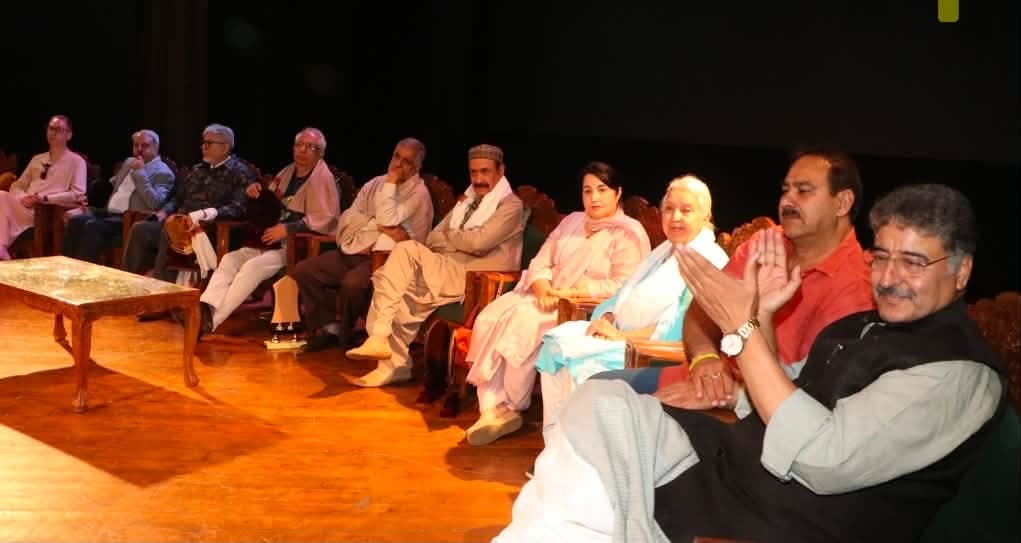
Srinagar, 14 Sep : The three-day ‘Kashmir Theatre Conference’ culminated today with a vibrant concluding and felicitation function, bringing together eminent theatre practitioners, scholars, writers, artists, cultural enthusiasts and distinguished guests to celebrate Kashmir’s rich theatrical heritage and deliberate upon its creative future.
The concluding day commenced at 11:00 a.m. with an academic paper-reading and presentation session, followed by an interactive brainstorming discussion on “The Future Prospects of Theatre in Kashmir.”
The academic sessions throughout the Conference featured paper readings and presentations by eminent theatre scholars, writers and practitioners, including Hasrat Gadda, Gouri Shankar Raina, Bhawani Basheer Yasir, Dr. Aiyash Arif, Ravi Kemmu, Gulzar Ahmad Bhat, Prof. Farooq Fayyaz, Lalit Parimoo, Majeed Khan, Shaikh Haneef, Shah-e-Jahan Ahmad Bhagat, Javaid Khan, Raees Wathoori, Nisar Naseem, Arshad Mushtaq, Reshi Rasheed, Hassan Javaid, M. Y. Shaheen, Hakeem Javaid, Ameen Bhat, Gulzar Fighter, Shaikh Altaf, Mir Sarwar, S. Humayun Qaisar and Mushtaaque Ali Ahmad Khan.
The scholarly deliberations explored the evolution and development of theatre in Kashmir, its contemporary challenges and future prospects. Speakers offered constructive suggestions concerning institutional support, creative experimentation, professional development, audience engagement and the long-term sustainability of theatre in the region. The sessions witnessed enthusiastic participation and a rich exchange of ideas among practitioners, scholars, artists and members of the audience.
The Concluding and Felicitation Function commenced at 4:00 p.m. with introductory remarks by Seyad Humayun Qaisar, who welcomed the distinguished guests, dignitaries, participants, collaborators, sponsors and audience members.
The function was graced by Theatre Practitioner Ravi Kemu, Writer/Theatre Practitioner Gauri Shankar Raina, Actor/Director Lalit Parimoo, Cardiologist Dr. Sheikh Burhan, Vice Chairperson SSM College of Engineering Dilafroz Qazi, Former Bureaucrat/Social Activist Roma Wani, Additional Secretary, J&K Academy of Art, Culture and Languages Lal Chand, National Spokesperson Lok Jan Shakti Party Sanjay Saraf and Former Revenue Minister Syed Basharat Bukhari as Guests of Honour. Secretary Information Muneer-ul-Islam (IAS) was the Chief Guest.
Addressing the gathering, the dignitaries lauded ACT FOR A BETTER TOMORROW for successfully organizing the Conference and creating a meaningful platform for artistic expression, research, dialogue and intellectual engagement. They emphasized the importance of cultural initiatives in preserving and promoting Kashmir’s rich artistic and theatrical heritage, while encouraging contemporary creativity and emerging artistic voices. The speakers also appreciated the organizers’ sustained efforts to bring theatre and the performing arts to the forefront and provide artists, scholars, writers and practitioners opportunities to exchange ideas and contribute towards the growth of the performing arts in the region.
As a mark of appreciation, mementos were presented by the Chief Guest to collaborators, participants and sponsors, while members of ACT FOR A BETTER TOMORROW were also felicitated for their dedicated efforts. The Chief Guest and Guests of Honour were subsequently felicitated with traditional Kashmiri shawls and mementos as a gesture of respect and gratitude.
Mushtaaque Ali Ahmad Khan presented the vote of thanks.
Adding cultural colour to the occasion were vibrant performances of the Kashmiri folk dance ‘Roff’ and Bhand-e-Pather, which captivated the audience with their grace, energy and traditional fervour, celebrating Kashmir’s enduring folk heritage.
During the three-day Conference, three theatrical productions were staged: “Zu Qadam Kaithis Taam” and “Conflict” in Kashmiri, and the Urdu play “Pagal Koun?” The productions received an enthusiastic response, earning appreciation and warm applause for their compelling performances and creative expression.
The successful conclusion of the Conference reaffirmed the importance of academic discourse, research, creative expression and theatrical performance in nurturing a vibrant and sustainable theatre movement in Kashmir. It also highlighted the need to preserve the region’s theatrical traditions while encouraging innovation, experimentation and new creative possibilities.
The Conference concluded on a note of optimism and renewed commitment, with a shared resolve to strengthen the theatre ecosystem and create greater opportunities for artists, practitioners, scholars, writers and young creative voices.
As the curtains fell on the three-day celebration, the spirit of theatre remained alive, carrying forward a renewed promise that Kashmir’s stage will continue to resonate with creativity, imagination, artistic courage and the timeless human stories that connect generations.

