

DR.FIAZ MAQBOOL FAZILI
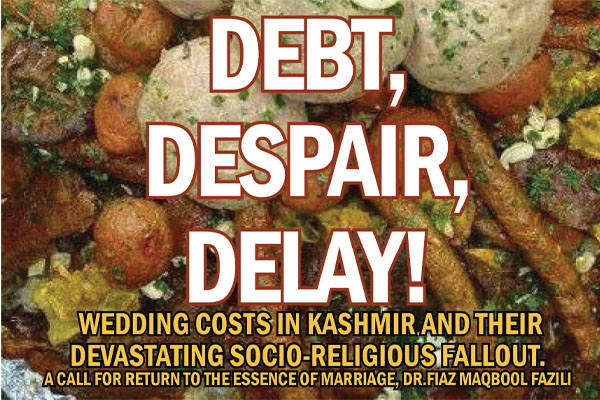
Kashmir, the “Paradise on Earth,” is witnessing a paradise lost for many aspiring couples and their families, buried under the suffocating weight of extravagant weddings. What was once a celebration steeped in rich cultural traditions and Islamic simplicity has morphed into a relentless pursuit of opulence, driving families into crippling debt, fueling depression, and tragically delaying marriages for years. Examining this crisis through a socio-religious lens reveals a complex interplay of social pressure, distorted traditions, economic fragility, and a drift away from core religious values.
The Anatomy of Extravagance: Breaking the Bank for a Single Day the cost of a “standard” middle-class Kashmiri wedding today is staggering, often running into tens of millions of rupees (lakhs). The inflation is pervasive. The Dowry (Jahez): Despite Islamic injunctions against it and legal prohibitions, the practice persists and has ballooned. Expectations now include not just basic household items, but luxury furniture sets, high-end electronics (multiple TVs, refrigerators, washing machines), designer clothing, and often exorbitant amounts of gold jewelry. Refusal can lead to social stigma or even broken engagements. The Venue , Destination Wedding & Catering: Gone are the days of community-supported home weddings. Lavish wedding halls, often charging exorbitant rates, are now the norm. Catering has become a competitive display, featuring multi-course feasts with expensive dishes (like Wazwan on a massive scale), imported ingredients, and sheer quantity meant to impress rather than nourish. Costs easily run into lakhs.Clothing & Jewelry: Bridal outfits are now designer affairs or imported lehengas costing fortunes. Grooms aren’t exempt, with expensive sherwanis. Gold remains central – the weight and intricacy of the bride’s jewelry set are major status symbols. Families often take loans specifically for gold purchases.Pre-Wedding Events: Engagement ceremonies, Mehendi, and other pre-wedding functions have evolved into full-fledged, costly events themselves, each demanding separate outfits, catering, and decorations.Decor, Photography, & Entertainment: Thematic decor rivaling film sets, expensive videographers and photographers, and hiring DJs or live bands add significant layers of cost. Destination pre-wedding shoots are increasingly common.Gifts & Miscellaneous: Expensive gifts for in-laws, large cash presents (salami), and the sheer logistics of transporting people and goods contribute to the final, dizzying figure.
Socio-Cultural Engines of Excess: Why the Pressure Cooker Explodes, the relentless spending isn’t driven by mere desire; it’s fuelled by deep-seated socio-cultural pressures, “Log Kya Kahenge?” (What Will People Say?): This pervasive fear of social judgment is the primary driver. Weddings are seen as the ultimate reflection of a family’s status, honour, and social standing. Skimping is interpreted as weakness, poverty, or lack of love for the child. Keeping up with, or surpassing, neighbours and relatives becomes an unwritten mandate.Distorted Social Validation: A lavish wedding is perceived as a successful culmination of parenting, a demonstration of prosperity, and a guarantee of future social respect for the new couple. The scale of the event is mistakenly equated with the depth of familial commitment.The Marriage Market: With a complex interplay of factors (including conflict-related anxieties), families feel immense pressure to present their children as “desirable” matches. Extravagant weddings are seen as a necessary investment to secure a “good” alliance in a competitive environment.Halal Dowry as Twisted Tradition: While Islam explicitly prohibits demanding dowry (Mahr is the groom’s obligatory gift to the bride, signifying commitment), the practice of Jahez has become deeply entrenched as a distorted cultural norm. It’s often rationalised as “helping the daughter set up her home,” but its scale and obligatory nature make it exploitative. The word ‘THAN ‘ used in our nikah namma(marriage contract )and ceremony still remains a dilemma for me — , any synonymity in Sharia , what exactly it means religiously or legally conveys what and what does it not? Is it even Sharia-compliant, given that it’s neither an Urdu, Arabic, nor Persian term?but local Kashmiri add on .Decades of conflict have created a pervasive sense of loss and uncertainty. For some, extravagant weddings become a form of psychological compensation – a defiant celebration of life and normalcy in the face of hardship, albeit an economically destructive one.
Religious Drift along with erosion of simplicity even when Islam emphasizes moderation, and avoiding extravagance, especially in celebrations. The Prophet Muhammad (PBUH) himself conducted marriages with minimal fuss, focusing on the religious contract (Nikah) and mutual commitment. Key principles like Prohibition of Israf (Extravagance) and Tabzeer (Wastefulness) are being overshadowed.The Quran and Sunnah repeatedly condemn wasteful spending. The sheer scale of food waste and expenditure on purely ostentatious displays directly contradicts these injunctions. The Mahr, a mandatory gift from the groom to the bride, is meant to be a token of respect and financial security for her. Its sanctity and significance is often buried under the weight of the dowry (Jahez) demanded from the bride’s family.The core of the Islamic marriage is the Nikah ceremony – a simple, solemn contract. The current focus has shifted overwhelmingly to the peripheral celebrations other than Walima an important day for celebration but should be within means, obscuring the religious essence.Burdening Families: Islam discourages placing undue hardship on oneself or others. The crippling debts incurred for weddings violate this principle, causing immense stress and potential injustice.The Devastating Fallout: Debt, Despair, and DelayThe consequences of this wedding arms race are severe and multifaceted with crippling debt cycles: Families routinely take out massive loans – from banks, relatives, or, perilously, informal lenders charging exorbitant interest. Selling ancestral land, properties, or dipping into life savings is common. Repayment can take decades, enslaving parents and sometimes the newlyweds themselves in a cycle of financial strain. *Example: A government employee spends 15+ years’ salary on one daughter’s wedding. The relentless pressure to perform financially, the fear of social censure, and the burden of debt are potent triggers for anxiety, depression, and chronic stress. Parents experience guilt and helplessness; young people feel the pressure of expectations. The post-wedding reality of debt can shatter marital bliss, leading to familial conflict and resentment.Delayed or Denied Marriages: This is perhaps the most tragic consequence. Many eligible young people, particularly men, are forced to delay marriage for years while they or their families save the exorbitant sums required. Others see potential matches dissolve because their family cannot meet the demanded dowry or wedding scale. This delay has profound social implications – increased frustration, societal tension, and personal loneliness. Example: A PhD scholar waits until his late 30s, saving for the wedding.Erosion of Family Resources: Money that could be invested in education, starting a business, buying a home, or securing healthcare is funneled into a single day’s event. This hinders long-term family prosperity and economic mobility.Normalization of Financial Irresponsibility: The acceptance of massive debt for a celebration sets a dangerous precedent, normalizing unsustainable financial behaviour.Towards Solutions: Reclaiming Sanity and Sanctity.Addressing this crisis requires a multi-pronged approach rooted in both social reform and religious reawakening.Religious Leadership (Imams & Scholars): Mosques and religious institutions must take a proactive role. Sermons (Khutbahs) and community programs need to consistently emphasize Islamic teachings on simplicity, the prohibition of extravagance and dowry, the importance of Mahr, and the sin of burdening families. Fatwas against excessive dowry and wasteful spending should be widely publicized.Community Mobilization: Grassroots efforts are crucial. Village elders, community leaders, and youth groups can initiate pledges for simpler weddings, set community standards for costs, and create support networks for families resisting pressure. Publicly celebrating simple weddings can shift norms.Government Action: Strict enforcement of existing laws against lavish weddings, guest control , number of dishes and cap on dowry is essential. Awareness campaigns promoting simple marriages and financial literacy regarding debt traps can be launched. Incentives or support for community marriage halls offering affordable packages could help.Media (local TV, newspapers, social media influencers) must promote positive stories of simple, beautiful weddings and critically examine the harms of extravagance. Challenging the “Log Kya Kahenge” narrative is key.Family & Individual Courage: Ultimately, change requires families and individuals to find the courage to prioritise financial sanity, mental well-being, and religious principles over social pressure. Open conversations about budgets and rejecting unreasonable dowry demands are vital first steps. Focusing on the spiritual significance of Nikah rather than the spectacle is fundamental.Key take away is a ,”Call for Return to Essence.The soaring cost of weddings in Kashmir is not merely an economic issue; it’s a socio-religious crisis with profound human costs. It reflects a society where tradition has been distorted, religious principles ignored, and social validation placed above financial sanity and mental well-being. The resulting debts are financial shackles, the depression is a silent epidemic, and the delayed marriages are a collective social wound.Reversing this trend demands a conscious return to the core values of Islam – simplicity, moderation, and compassion – coupled with a courageous societal rejection of destructive competition and ostentation. It requires reclaiming the wedding not as a battlefield for social one-upmanship funded by debt, but as a sacred, joyful affirmation of love and commitment, accessible to all. Only then can Kashmir hope to lift the crushing weight of gold from the shoulders of its future generations and restore true sanctity to the union of marriage. The paradise of matrimony should not be paved with the despair of debt.
The Author is a Surgeon at Mubarak hospital, Healthcare policy analyst, Certified Professional in Quality improvement in Hospitals can be reached at drfiazfazili@gmail.com

