

Amir Suhail Wani
Srinagar 30 Jun : The effectiveness of any public institution ultimately depends upon the vision, integrity and determination of those entrusted with its leadership. Institutions responsible for managing religious endowments carry an even greater responsibility because they are custodians of both material assets and public faith. In recent years, the Jammu & Kashmir Waqf Board has undergone a remarkable phase of institutional transformation under the leadership of Dr. Darakhshan Andrabi. Her tenure has been characterised by an ambitious programme of administrative reforms, infrastructure development, improved governance, protection of Waqf assets and a renewed emphasis on transparency and public service. By combining modern management practices with respect for religious heritage, she has sought to restore the Waqf institution to its original purpose as an instrument of community welfare and social development.
The institution of waqf has historically occupied a central place in Islamic civilisation. For centuries, charitable endowments financed mosques, shrines, schools, hospitals, libraries and numerous welfare initiatives, serving communities irrespective of social or economic status. However, many Waqf institutions across South Asia gradually became burdened by administrative inefficiencies, poor record management, encroachments upon valuable properties and inadequate utilisation of resources. Recognising these longstanding challenges, Dr. Andrabi approached the administration of the Jammu & Kashmir Waqf Board with the objective of creating a modern, accountable and development-oriented institution capable of meeting contemporary expectations while preserving its religious character.

One of the most visible achievements of her leadership has been the large-scale improvement of infrastructure at shrines and religious institutions managed by the Waqf Board. Numerous sacred sites across Jammu and Kashmir have witnessed extensive renovation, beautification and expansion. Modern sanitation facilities, improved lighting, better drinking water arrangements, upgraded pathways, landscaped surroundings and enhanced accommodation for devotees have significantly improved the experience of pilgrims and visitors. These projects have gone beyond simple maintenance; they reflect an understanding that religious institutions should provide a clean, organised and dignified environment befitting their spiritual importance. The development of community halls, administrative buildings and supporting infrastructure has further strengthened the capacity of these institutions to serve the public efficiently.
Equally significant has been her determination to streamline the functioning of the Waqf Board itself. Effective governance requires transparent procedures, accurate documentation and efficient financial management. During her tenure, greater emphasis has been placed on improving institutional systems, strengthening administrative oversight and ensuring that decisions are implemented with greater accountability. Efforts have been made to improve coordination between different levels of administration, enhance project monitoring and introduce greater professionalism into the functioning of the Board. Such reforms are essential because institutional credibility depends not merely upon announcements but upon consistent and transparent implementation.
Protection of Waqf properties has emerged as another major area of reform. Across India, illegal occupation and encroachment upon Waqf land have long undermined the ability of these institutions to fulfil their charitable objectives. Valuable assets intended for public welfare often remained underutilised because of legal disputes or weak administrative oversight. Under Dr. Andrabi’s leadership, sustained efforts have been undertaken to identify, document and safeguard Waqf properties while pursuing legal measures wherever necessary to protect institutional interests. Recovering and preserving these assets ensures that revenues generated from them can once again be directed towards religious services, maintenance of shrines and broader community welfare.
Financial transparency has also received considerable attention during this period of reform. Public confidence in charitable institutions depends upon the responsible utilisation of resources entrusted to them. By strengthening financial discipline, improving revenue management and ensuring greater oversight over expenditure, the Waqf Board has sought to establish higher standards of accountability. The emphasis has been on ensuring that income generated from Waqf properties is utilised for the benefit of the community and for the maintenance and development of religious institutions. Such measures reinforce public trust while creating the financial capacity necessary for long-term developmental projects.

Another important aspect of Dr. Andrabi’s leadership has been the preservation of Kashmir’s rich spiritual and cultural heritage. The Valley is home to some of the most revered Islamic shrines associated with saints, scholars and Sufi traditions that have shaped the region’s composite culture for centuries. Conservation of these sacred sites requires continuous attention because of ageing structures, environmental challenges and increasing numbers of visitors. Through restoration works, structural improvements and beautification initiatives, the Waqf Board has contributed significantly to preserving these important symbols of Kashmir’s religious and cultural identity. Heritage conservation under her leadership has therefore become both an act of preserving history and an investment in future generations.
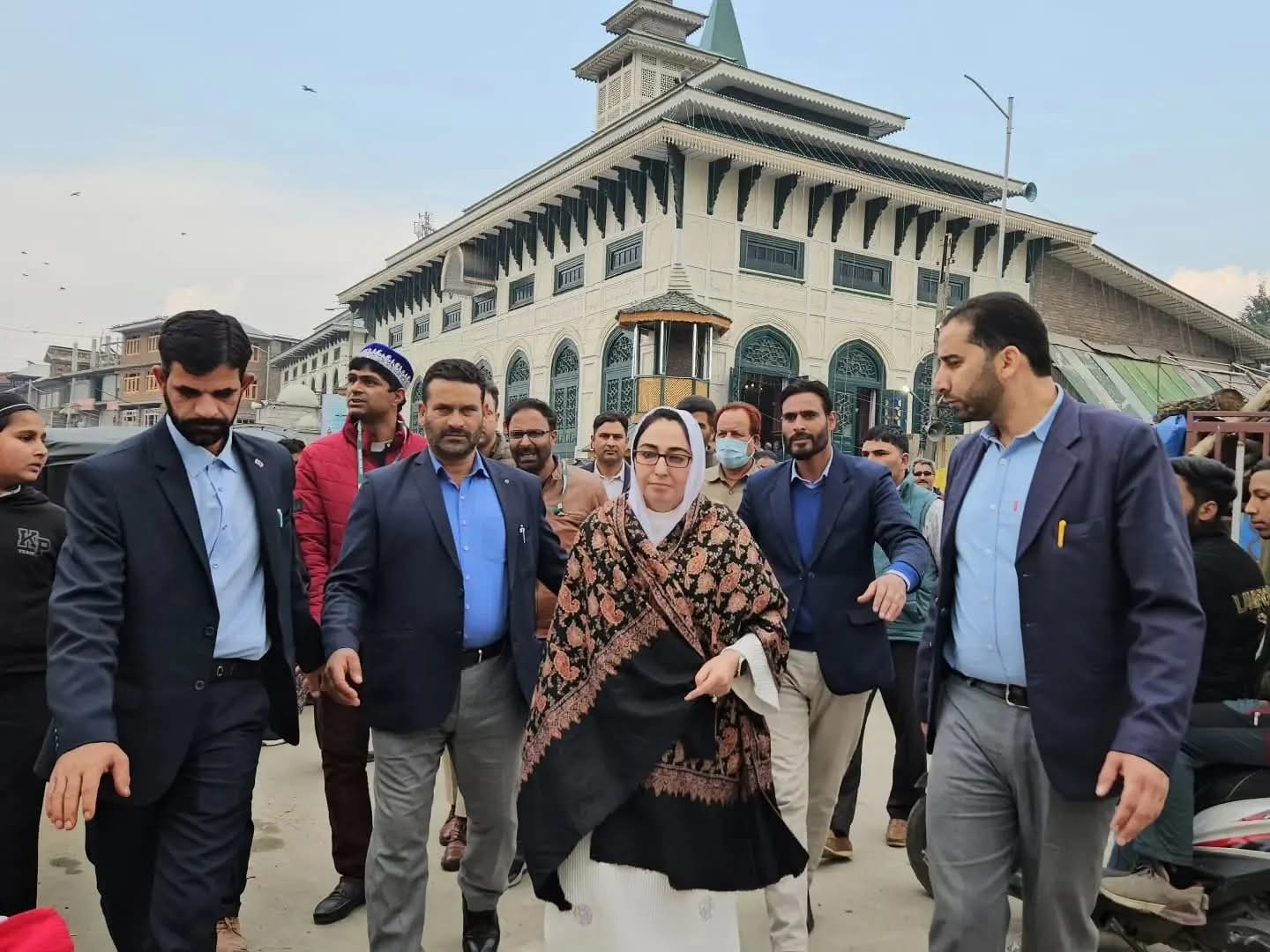
Her tenure has also been distinguished by an accessible style of leadership. Rather than remaining confined to administrative offices, Dr. Andrabi has maintained regular engagement with local communities, shrine management committees, religious scholars and public representatives. Frequent inspections, direct interaction with devotees and on-site monitoring of developmental projects have helped ensure that administrative decisions remain connected to the practical needs of the people. Such responsiveness has contributed to greater public confidence in the institution while enabling timely identification and resolution of local concerns.
An equally notable dimension of her leadership is the example she has set as a woman heading one of the most important religious institutions in Jammu and Kashmir. Her success demonstrates that effective public administration depends upon competence, commitment and integrity rather than traditional assumptions regarding leadership roles. By successfully managing a complex institution with significant religious, social and administrative responsibilities, she has broadened perceptions regarding women’s participation in public life while inspiring confidence in merit-based leadership within public institutions.
The reforms undertaken during her tenure also coincide with broader discussions on improving Waqf governance across India. National efforts aimed at enhancing transparency, accountability and efficient management of Waqf properties require effective implementation at the institutional level. In this regard, the experience of the Jammu & Kashmir Waqf Board illustrates how administrative reforms can produce tangible improvements when supported by determined leadership and clear institutional objectives. Modern governance requires accurate records, systematic planning, financial discipline and efficient execution, all of which have received considerable emphasis during this period.
Perhaps the most enduring contribution of Dr. Darakhshan Andrabi lies in changing the public perception of the Waqf institution itself. Instead of being viewed merely as an administrative body responsible for maintaining religious properties, the Waqf Board has increasingly projected itself as a dynamic institution committed to heritage conservation, public service, community development and institutional excellence. This renewed vision is closely aligned with the original philosophy of waqf, which has always regarded charitable endowments as instruments for serving society across generations.
Every programme of institutional reform inevitably encounters challenges, yet sustainable transformation is achieved through persistence, planning and continuous improvement. Dr. Andrabi’s tenure demonstrates that meaningful reform requires not only developmental projects but also systematic changes in governance, transparency and administrative culture. By focusing simultaneously on infrastructure, protection of Waqf assets, financial accountability, heritage conservation and responsive public administration, she has laid the foundation for a stronger and more credible Waqf institution capable of fulfilling its religious and social responsibilities.
The experience of the Jammu & Kashmir Waqf Board under Dr. Darakhshan Andrabi offers an important lesson in contemporary public administration. Traditional institutions remain relevant only when they adapt to changing expectations while remaining faithful to their foundational values. Through her dynamic leadership, administrative discipline and commitment to public welfare, she has demonstrated that religious institutions can successfully combine heritage with modern governance. Her reforms have not only strengthened the functioning of the Waqf Board but have also reinforced public confidence in an institution whose historic mission has always been to serve faith, preserve heritage and promote the welfare of society.

