

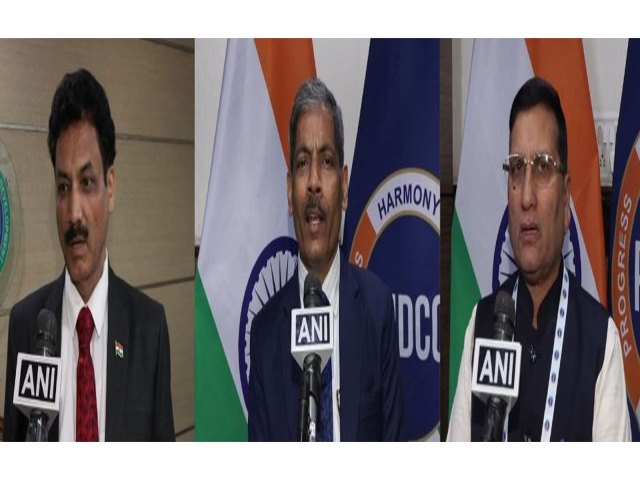
New Delhi , March 31: India’s oil sources coming through the Strait of Hormuz are currently being managed through active diplomacy and dialogue, though industry leaders warn that a prolonged West Asia crisis could have far-reaching consequences for the nation’s energy security. Speaking to ANI on the sidelines of the PHDCCI’s Hydrocarbons Summit 2026 held in Delhi on Tuesday, experts highlighted that while immediate supplies remain steady, the volatility in international markets necessitates a shift toward domestic production and broader procurement bases. Ranjeet Mehta, CEO and Secretary General of PHDCCI, noted that the country has navigated the immediate crisis effectively through strategic international relations. “I think India has managed it very well with dialogue, with our diplomacy, that our energy sources are passing through the state of Hormuz,” Mehta said. However, he cautioned that the domestic impact is already becoming visible in the commercial sector. “Commercial LPG gas has been cut down and we have also got our members that have been giving us the feedback. In many cities, many restaurants have been shut down, not the dining facilities, only
supplying online orders,” Mehta said, adding that when businesses close, “people also lose jobs.” The logistical challenges of shifting oil sources have also introduced new variables into India’s supply chain. Mehta explained that diversifying away from traditional hubs creates a notable time lag in deliveries. “It might take around three to four weeks to get the energy source from Russia. When we were getting from Qatar, we were getting within a week’s time. So there is a time gap right now,” he stated. He emphasised that the nation’s goal of becoming a developed economy relies on reducing its heavy reliance on foreign fuel, noting, “we cannot be Viksit Bharat while we import around 85% of our energy sources.” Anjan Kumar Mishra, Secretary of the Petroleum and Natural Gas Regulatory Board (PNGRB), acknowledged the pressure the current situation places on the country but remained optimistic about the government’s contingency plans. “I won’t lie that it is not affecting us. But definitely the government has come up with all the plans,” Mishra said. He addressed concerns regarding strategic reserves, clarifying that such stockpiles
have inherent limits. “You cannot build a reserve which will last for maybe six months at a time. It may cater for 20 to 40 days, but it may not be able to cater for six months,” he explained. Mishra noted that India has already broadened its source base to include oil from Venezuela and Russia to mitigate Middle Eastern dependencies. Providing a roadmap for domestic resilience, AK Tiwari, Member of PNGRB, suggested that accelerating the adoption of Piped Natural Gas (PNG) and Compressed Biogas (CBG) is essential to insulate the country from global shocks. Tiwari proposed that certain urban areas could transition entirely away from traditional cylinders. “There are Tier-I and Tier-II cities which are there where more than 50% of the LPG are being used. I think these cities could be declared as LPG free cities where already pipeline is there,” Tiwari said. He urged for the expedition of 5,000 planned CBG plants to bolster domestic gas and fertilizer production. Despite the international tension, Tiwari advised against panicking, stating, “I don’t think they should have panic buttons for that.”

