

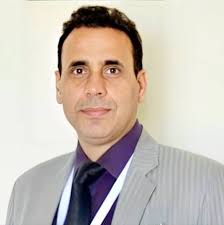
75 million patients cannot be excluded from a ‘global’ consensus: Dr Ashraf Ganie, Director SKIMS
SRINAGAR, May 20: A major international effort to rename one of the world’s most widespread hormonal disorders has triggered a fierce scientific backlash from India’s top medical researchers, who argue that the proposed change ignores the very populations carrying the heaviest burden of the disease.
At the center of the controversy is a newly proposed term for Polycystic Ovary Syndrome (PCOS), a condition affecting millions of women globally and long associated with hormonal imbalance, infertility, irregular menstruation, metabolic dysfunction, and long-term cardiovascular risks.
Recently unveiled in The Lancet and announced during the European Congress of Endocrinology in Prague, the proposed new nomenclature — Polyendocrine Metabolic Ovarian Syndrome (PMOS) — was intended to modernize and broaden the understanding of the disorder beyond its decades-old clinical label.
But India’s leading PCOS investigators are now calling the move scientifically premature, geographically exclusionary, and potentially dangerous for diagnostic clarity.
Leading the opposition is Mohd Ashraf Ganie, National Chief Coordinator of the Indian Council of Medical Research (ICMR) PCOS Task Force and Director of Sher-i-Kashmir Institute of Medical Sciences. Joined by senior investigators Neena Malhotra and Rakesh K. Sahay, the Indian research leadership has issued a formal objection to the global renaming exercise, arguing that the process lacked representation from the regions most affected by the condition.
The dispute cuts to the heart of a larger question increasingly confronting global medicine: who gets to define diseases that disproportionately affect the developing world?
According to Prof. Ganie, the proposed consensus emerged largely from research ecosystems in Western countries, particularly Australia and parts of Europe, while sidelining the immense clinical datasets emerging from India and China — nations he describes as the “PCOS capitals” of the world. India alone, he notes, is estimated to account for nearly 44 million affected women, while China contributes another 31 million cases. Together, the two countries represent a patient burden vastly larger than that of many nations shaping the new terminology.
“A decade of study that ignores the data of 44 million women in India and 31 million in China is not a global consensus,” Prof. Ganie asserted, criticizing what he described as a fundamental imbalance in the evidence base used to justify the renaming.
The criticism is particularly sharp because the ICMR-PCOS Task Force has spent years building one of the largest multicentric studies ever conducted on the disorder. Spread across 18 specialized centers throughout India, the project includes nearly 9,000 participants and is regarded by Indian researchers as among the most comprehensive attempts to map the syndrome’s clinical diversity across ethnic, metabolic, and socioeconomic groups.
For decades, physicians and researchers worldwide have acknowledged dissatisfaction with the term “Polycystic Ovary Syndrome,” originally rooted in the 1935 Stein-Leventhal description of the disease. Critics have long argued that the name overemphasizes ovarian cysts, despite the condition manifesting far beyond reproductive anatomy. Many patients diagnosed with PCOS do not, in fact, display classical ovarian cyst morphology, while others suffer predominantly from metabolic complications such as insulin resistance, obesity, diabetes risk, and cardiovascular abnormalities.
Yet Indian investigators argue that PMOS fails to solve this historical problem and instead risks entrenching it further.
Prof. Ganie points to extensive Indian cohort data showing that a significant proportion of affected women display normal ovarian morphology despite severe endocrine and metabolic symptoms. In their view, placing the word “ovarian” back at the center of the disorder’s identity reinforces an outdated organ-centric framework that modern endocrinology has been trying to escape.“By re-centering the ovary in the title, we are merely polishing a 1935 morphological bias,” Prof. Ganie said. “In the vast majority of our patients, the ovary is a silent bystander to a much larger metabolic derangement.”
The inclusion of the word “polyendocrine” has generated even deeper concern among Indian specialists, who warn that the terminology may create immediate confusion within primary healthcare systems, particularly in countries already struggling with overburdened diagnostic infrastructure. Researchers fear the term could be mistaken for complex multi-glandular disorders such as Multiple Endocrine Neoplasia or Autoimmune Polyglandular Syndrome, both medically distinct but linguistically similar.
For clinicians in busy outpatient settings, Indian endocrinologists argue, such overlap could dilute diagnostic precision rather than improve it.
Perhaps most controversially, the Indian task force claims that the new name sidelines hyperandrogenism — the excess production of male hormones widely considered one of the syndrome’s defining clinical hallmarks. Symptoms such as excessive facial hair growth, acne, scalp hair loss, and severe hormonal imbalance remain central to diagnosis in many patients, yet the proposed nomenclature makes no direct reference to androgen excess.
That omission, researchers warn, risks obscuring the disorder’s core endocrine identity.
The debate arrives at a time when India is confronting what many experts now describe as a silent epidemic of metabolic and reproductive disorders among young women. The ICMR study has reportedly identified an emerging “Pre-PCOS” phenotype — a metabolic-risk category researchers believe may represent an early precursor stage of the syndrome. Investigators warn that rising rates of obesity, sedentary lifestyles, insulin resistance, and nutritional transitions are accelerating hormonal disorders at unprecedented levels across South Asia.
According to the researchers, nearly every fourth woman in India may now exhibit some form of metabolic irregularity associated with the broader PCOS spectrum, raising alarm about future burdens on fertility, diabetes prevalence, and cardiovascular health.
The growing disagreement has transformed what might once have been an academic terminology debate into a broader geopolitical argument about scientific representation, medical authority, and the dominance of Western frameworks in global health policymaking.
For India’s leading endocrinologists, the issue is no longer merely about semantics. It is about whether the future definition of a disorder affecting tens of millions of Asian women can legitimately emerge without those women’s data sitting at the center of the discussion.
As the international medical community weighs the proposed PMOS terminology, the resistance from India’s largest endocrine and gynecological research networks suggests that the battle over what to call the syndrome may ultimately redefine far more than a disease name. It may determine who holds the authority to shape the future vocabulary of global medicine itself.
