

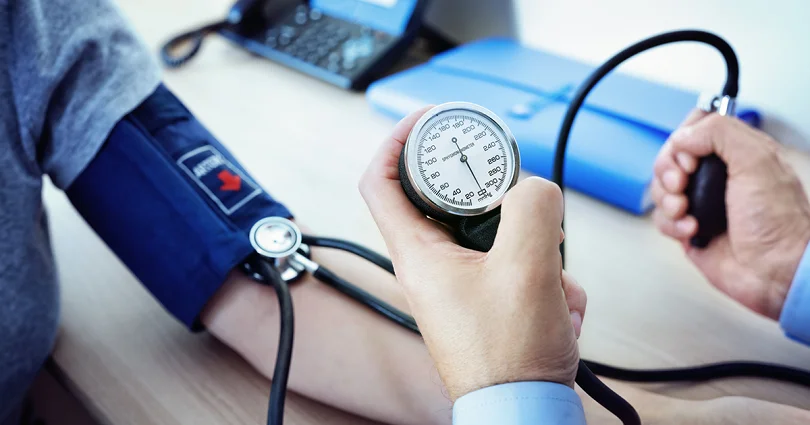
Srinagar 19 May – Hypertension is emerging as a major public health concern in Jammu and Kashmir, with official figures revealing that only 36 per cent of women and 31 per cent of men in the Union Territory have normal blood pressure levels, according to the National Family Health Survey-5.
The data from the National Family Health Survey-5 (NFHS-5) reveals that this growing health challenge is linked to changing lifestyles, stress, poor dietary habits and lack of physical activity, reported news agency .
The survey further reveals that nearly 57 per cent of the population falls in the pre-hypertensive category, a condition considered an early warning sign before the onset of hypertension.
Health experts say people in this stage are highly vulnerable to developing full-fledged high blood pressure if preventive measures are not adopted in time.
According to the data, around 11 per cent of women and 10 per cent of men aged between 15 and 49 years are already living with hypertension in Jammu and Kashmir.
The figures also highlight a steady rise in hypertension with increasing age. Among adolescents aged 15 to 19 years, only about three per cent are hypertensive. However, the prevalence gradually increases across age groups, reaching four per cent among people aged 20–24 years, seven per cent in the 25–29 age group, 8.5 per cent among those aged 30–34 years, 14 per cent in the 35–39 age bracket, and nearly 20 per cent among people aged 40–45 years. The rate further climbs to 24 per cent among individuals aged 45–49 years.
At the same time, the percentage of people with normal blood pressure declines sharply with age. While nearly 60 per cent of teenagers in the 15–19 age group have normal blood pressure, the figure drops to just 17 per cent among people aged 45–49 years.
The survey also points towards a rise in pre-hypertension with age. Around 40 per cent of adolescents fall in the pre-hypertensive category, while the percentage increases to nearly 62 per cent in older adults aged 45–49 years.
Urban areas in Jammu and Kashmir reported slightly higher cases of hypertension compared to rural regions. Among women, nearly 10.3 per cent in urban areas were found to be hypertensive compared to 9.7 per cent in rural areas. A similar trend was observed among men as well.
The data further categorises hypertension severity levels. Among women, around seven per cent suffer from Stage-1 hypertension, one per cent from Stage-2 hypertension and less than one per cent from Stage-3 hypertension. A small proportion of women were also found to be taking medication despite recording normal blood pressure levels during screening.
Among men, eight per cent were found to have Stage-1 hypertension, one per cent Stage-2 hypertension and 0.2 per cent Stage-3 hypertension. Some men were also on anti-hypertensive medication despite having controlled blood pressure readings.
Medical experts describe hypertension as a “silent killer” because it often develops without noticeable symptoms but significantly increases the risk of heart disease, stroke, kidney failure and other life-threatening complications.
Doctors attribute the growing burden of hypertension to unhealthy eating habits, excessive salt intake, obesity, lack of exercise, smoking, alcohol consumption, mental stress and sedentary lifestyles.
Health experts stressed the need for greater public awareness, routine blood pressure monitoring and timely medical consultation. They advised people to adopt healthier lifestyles, including balanced diets, regular exercise, stress management and avoiding tobacco and alcohol to reduce the risk of hypertension and related diseases.
‘Hypertension Rising Alarmingly Among Youngsters’
Hypertension, commonly known as high blood pressure, is rapidly emerging as one of the biggest public health concerns in Kashmir, with doctors warning that the condition is silently affecting a significant portion of the population, including young adults and even school-going children.
Medical experts described hypertension as a “silent killer” because it often develops without noticeable symptoms, while gradually damaging vital organs and increasing the risk of heart attacks, brain strokes, kidney failure and other life-threatening complications.
Dr Mohammad Salim Khan, Head of the Department of Community Medicine at Government Medical College (GMC) Srinagar, said hypertension has become the most prevalent non-communicable disease and is affecting nearly every third or fourth person.
“Hypertension is the most prevalent non-communicable disease affecting every third to fourth person. However, being without any symptoms, it affects the end organs and can cause heart attacks, brain strokes and other complications unless diagnosed early and treated properly,” he said.
Dr Khan said the growing burden of hypertension is closely linked to drastic lifestyle and dietary changes witnessed in recent years.
“The lifestyle changes, including high consumption of salt, oils and fats, fast foods, sugars, along with sedentary lifestyle, minimal physical activity, stress and addiction to tobacco, alcohol and narcotics, are major risk factors pushing people towards hypertension at an early age,” he said.
He warned that hypertension and pre-hypertension are no longer confined to older people, stating that adolescents and even young children are increasingly being diagnosed with the condition.
Doctors expressed concern that a majority of patients remain unaware that they are suffering from high blood pressure until serious complications develop.
“The majority of hypertensive patients are unaware of their condition, which can eventually lead to cardiovascular events such as heart attacks and strokes. Even among diagnosed patients, many fail to take medicines regularly,” Dr Khan said.
Highlighting Kashmir-specific dietary habits, Dr Khan said excessive consumption of traditional salted tea and bakery products is also contributing significantly to the problem.
“Noon Chai consumption by Kashmiris is one of the major contributors to hypertension in the Kashmiri population. Further, the local bakery products, particularly kandur tchot, also contain considerable amounts of salt,” he said.
Doctors said while the World Health Organization (WHO) recommends a daily salt intake of less than five grams, many Kashmiris consume nearly double or even triple that amount through traditional foods and eating habits.
Dr Aabid Hussain from the Directorate of Health Services Kashmir (DHSK), posted in south Kashmir, said hypertension continues to remain largely undetected because it usually does not produce obvious symptoms.
“Every third or fourth adult in our area has hypertension, but almost half of them are unaware of their condition, as hypertension often shows no symptoms during its course apart from vague complaints that are often attributed to other illnesses,” he said.
He added that poor control of blood pressure among diagnosed patients is another major concern. “Unfortunately, four out of five hypertensive patients do not keep their blood pressure under control, which can lead to severe consequences including heart attacks, strokes and kidney failure,” Dr Aabid said. ( KNO )

