

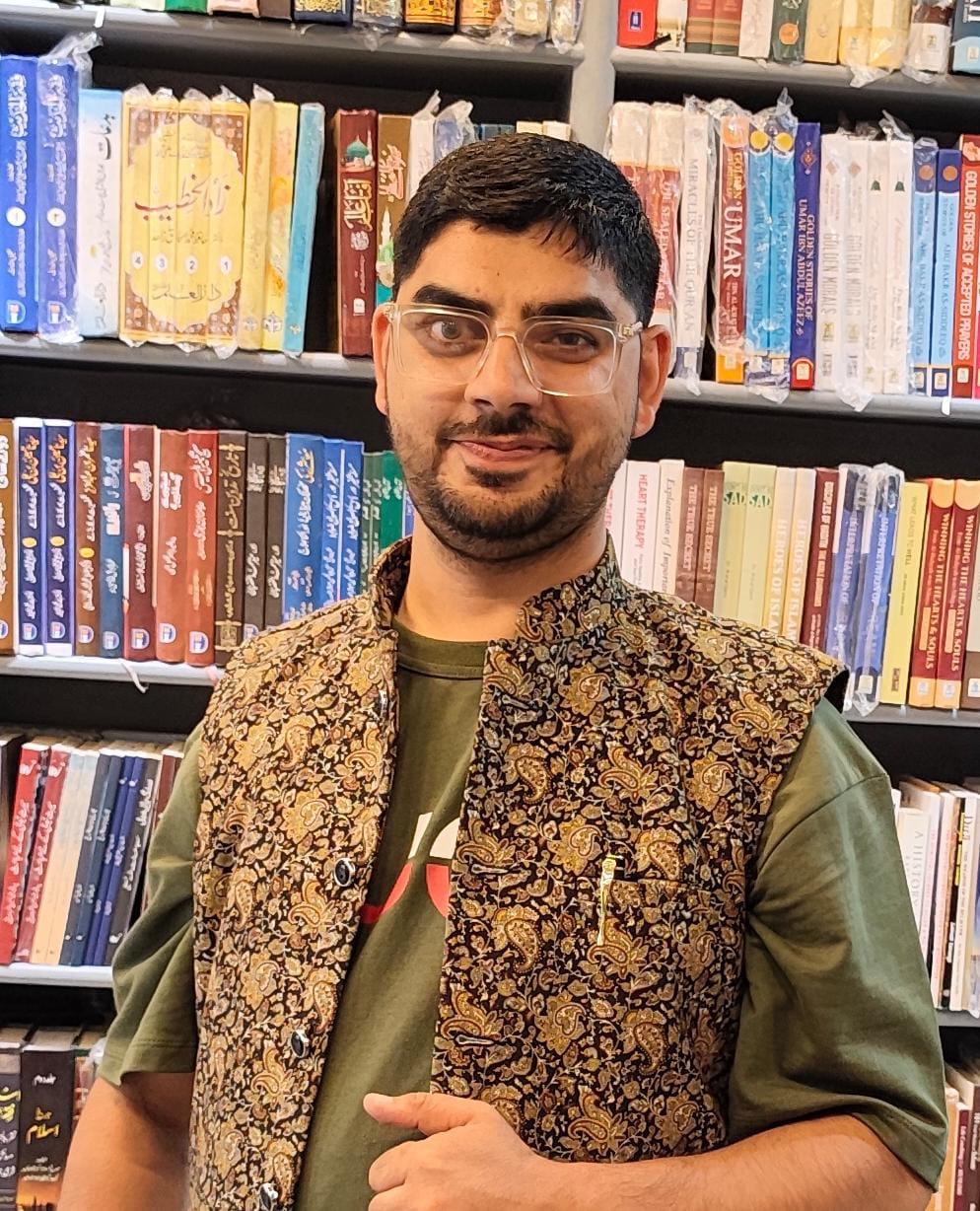
By Amir Suhail Wani
There is something deeply emotional about watching an elected Assembly at work. For an ordinary citizen, the Legislative Assembly is not merely a large hall where elected representatives sit. It is, in a very real sense, the voice of the people. Every member who enters that House carries with him or her the hopes, complaints, expectations and anxieties of thousands of people. Behind every question raised, every issue discussed and every demand made, there is usually an ordinary family waiting for something to improve in its life. This is why the people of Jammu and Kashmir watch their Assembly with considerable interest. They want their representatives to disagree when disagreement is necessary, but they also want them to remember that the House ultimately belongs to the people.
The recent session of the Jammu and Kashmir Legislative Assembly witnessed considerable political disagreement, protests and interruptions, even though substantial legislative business was also conducted. The Speaker stated at the conclusion of the session that the House had held seven sittings over about 25 hours, received 646 questions and passed six of eight government Bills introduced during the session. These figures remind us of something important: our legislators have a great deal of work to do. The question before all of them is not whether disagreement should exist—it certainly should—but whether disagreement can be expressed in a manner that allows the House to continue doing the work for which the people elected it.
A common man does not expect our legislators to agree with one another on everything. In fact, democracy would lose much of its meaning if there were no differences of opinion. The Government has a responsibility to defend its policies and explain its decisions. The Opposition has an equally important responsibility to question the Government, point out shortcomings and bring public grievances to its attention. These are not obstacles to democracy; they are essential parts of democracy. But there is a difference between strong opposition and disruption, just as there is a difference between defending the Government and refusing to listen to criticism. Perhaps the greatest strength of a mature legislature is its ability to accommodate both.
My humble appeal, therefore, is first to the Hon’ble Chief Minister and the Council of Ministers. The Government has the greater responsibility because it has the power to act. It should therefore approach criticism with patience and generosity. Every question raised by an Opposition member need not be treated as an attack upon the Government. Sometimes criticism may contain a genuine grievance of the people. Sometimes an uncomfortable question may reveal a problem that deserves attention. A Government becomes stronger, not weaker, when it listens carefully to criticism and responds to it with facts, patience and action. The Chief Minister, in particular, has the opportunity to set the tone of the entire House. A calm response to an angry intervention can sometimes achieve more than a powerful counterattack.
The Government should also make every possible effort to keep its commitments made on the floor of the House. The Speaker himself has recently reminded members that if government assurances are not fulfilled, legislators should bring the matter to his notice, emphasising that the Government is accountable to the Assembly. This principle deserves to become a living tradition. When a minister gives an assurance, an ordinary citizen sitting at home should be able to believe that the matter will not disappear after the cameras are switched off and the session ends. A simple system of periodically reviewing assurances given in the Assembly could go a long way towards strengthening public confidence.
My appeal to the Opposition, including the BJP and every other Opposition group, is equally sincere. Opposition is not a lesser form of public service. It is an essential democratic responsibility. An Opposition member who raises the problems of unemployed youth, employees, traders, farmers, students, workers, pensioners or people living in remote areas is performing a valuable service. But the strength of an Opposition does not lie only in how loudly it can protest. Its greater strength lies in how effectively it can question, investigate, expose shortcomings, offer alternatives and hold the Government accountable. A carefully prepared question, supported by facts and followed by a precise demand, may sometimes have a greater impact than prolonged shouting.
There is also a simple human consideration which perhaps all our legislators can keep in mind. When the Assembly is disrupted, the politician may move on to the next meeting, the next press conference or the next political programme. But the ordinary citizen remains where he was. The young person waiting for employment continues waiting. The family seeking a government service continues waiting. The small trader struggling with rising costs continues struggling. The student anxious about his future continues worrying. The elderly person waiting for an administrative decision does not experience the adjournment as a political event. For him or her, it may simply mean another day without an answer.
This is why the time of the Assembly is extremely precious. Every minute lost to unnecessary disorder is ultimately public time. The salaries and facilities of elected representatives are supported by public resources, and therefore the hours spent inside the House should be treated almost as sacred hours of public service. Strong words may be necessary at times. Protest may sometimes be unavoidable. But perhaps there should be a shared understanding among all parties that Question Hour, important legislative business and matters directly affecting ordinary citizens should receive the maximum possible protection from disruption.
The Speaker, too, occupies a uniquely important position in this process. The Chair belongs to the entire House and, beyond the House, to the people of Jammu and Kashmir. The Speaker has to balance discipline with the right of members to express themselves. That is not an easy responsibility. Recent remarks by Speaker Abdul Rahim Rather acknowledged both the difficulties caused by disruptions and the importance of accommodating members irrespective of political affiliation. He also called for disagreements to be expressed more constructively. Perhaps this spirit can become the foundation for future sessions.
One practical suggestion would be to develop a stronger culture of all-party consultation before every session. The Business Advisory Committee already includes members from different political parties and has the responsibility of recommending the allocation of time for Bills and other House business. This mechanism could be used even more effectively to identify the most important public issues in advance, allocate adequate time to them and establish a broad understanding about maintaining the essential business of the House. If all parties enter a session knowing that their important concerns will receive a fair opportunity to be heard, there may be less temptation to resort to repeated disruption.
Another modest suggestion would be to devote a regular portion of legislative time exclusively to constituency problems. Members could bring a small number of clearly documented local issues before the House and the concerned ministers could respond within a fixed period. Imagine the confidence this could generate among people if an MLA could tell a constituent: “I have raised your matter in the Assembly, the concerned department has responded, and we will follow it up.” Democracy would then become something the common man experiences directly rather than something he merely watches on television.
There should also be greater respect for the language of disagreement. Politics naturally produces strong emotions. Legislators represent different constituencies and different political traditions. They will sometimes disagree passionately. But there is a great difference between saying, “I strongly disagree with this decision,” and questioning the intentions or dignity of another member. The former strengthens debate; the latter can poison it. Our legislators can disagree without becoming enemies. They can challenge one another without humiliating one another. They can even leave the Assembly after a heated debate and remain capable of shaking hands.
This is particularly important because young people are watching. Political behaviour inside an Assembly becomes a lesson in citizenship outside it. If young people see leaders disagreeing respectfully, listening to opposing arguments and eventually finding common ground, they learn that democracy is a civilised method of resolving differences. If they see only anger, interruption and personal confrontation, they may begin to believe that politics is simply a contest of noise. Our political representatives therefore have an educational responsibility, whether they consciously recognise it or not.
At the same time, the Government should not expect the Opposition to remain silent merely because the Government has received a mandate. A mandate gives a Government the authority to govern; it does not remove the Opposition’s responsibility to question. Similarly, the Opposition should not expect the Government to accept every demand simply because it has been raised forcefully. The Government has its own mandate and administrative responsibilities. The healthy middle ground is dialogue: the Government listens, the Opposition questions, the Speaker facilitates, and the people ultimately benefit.
Perhaps our legislators could also consider ending each session with a simple public account of what was achieved. How many questions were answered? How many assurances were made? How many matters were referred to departments? How many Bills were discussed? What remains pending? Such a practice would help shift attention from political confrontation towards measurable public work. It would also allow citizens to judge the performance of the institution through its work rather than merely through the intensity of its political exchanges.
The people of Jammu and Kashmir have lived through difficult times. They have seen enough uncertainty, anxiety and division in their lives. What they now want from their democratic institutions is something profoundly simple: stability, dignity, opportunity and hope. They want their children to study without anxiety about their future. They want young people to find meaningful opportunities. They want roads, electricity, healthcare, education and responsive administration. They want their elected representatives to remember them after the election as sincerely as they remembered them before it.
The Assembly can become a place where these hopes are given a voice. It can be a place where a small village problem receives the same seriousness as a major policy question. It can be a place where the Government learns from criticism and the Opposition demonstrates the value of scrutiny. It can be a place where political differences remain strong but personal bitterness remains limited.
Ultimately, every MLA, whether sitting on the Treasury Benches or in the Opposition, entered the Assembly through the same democratic door: the people. Their political affiliations may differ, their ideologies may differ and their approaches to public policy may differ, but the source of their authority is the same citizen. That citizen may be a farmer in a distant village, a shopkeeper in a town, a teacher, a student, a government employee, a daily-wage worker, a mother managing a household or a young person searching desperately for a future.
That common citizen has only one humble request: please disagree, but do not stop working; please protest, but do not forget the people; please defend your position, but also listen to the other side. The Assembly does not need to become a place without disagreement. It needs to become a place where disagreement produces better governance. The people do not ask their representatives to think alike. They ask them to remember alike—that they are there because ordinary people placed their trust in them. That trust is perhaps the most precious thing any democracy possesses. It should be protected with patience, restraint, dignity and, above all, with a sincere commitment to public service.

