Updated:
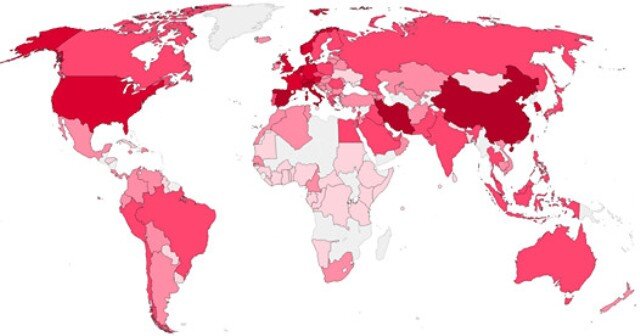
The coronavirus outbreak is now a pandemic, the World Health Organization declared on March 11, as global confirmed cases of Covid-19 now surpass 550,000 worldwide, with deaths topping 27,000. The outbreak has spread from the Chinese city of Wuhan in late January to more than 140 countries and territories—affecting every continent except Antarctica—in the course of a month. Cases in Europe now exceed the number in China. Efforts to prevent the pneumonia-like illness from spreading further has led to shuttered cities, widespread flight cancellations and shaken financial markets.
Countries around the world are taking drastic measures to stop the spread of COVID-19 on their homefront, after many reported cases were imported from elsewhere. Australia and New Zealand announced on March 19 that they would block all foreigners from entering, regardless of where they’ve been, while citizens and residents returning from abroad would have to undergo a 14-day quarantine.
In Europe, the new epicenter of the pandemic, restrictions on travel are threatening the EU’s quintessential freedom of movement. At least 10 members of the bloc, as well as Switzerland and Norway, are enforcing national border controls—disrupting not just movement of people but also trade.
More than 50 governments have placed blanket bans on incoming travelers, and more than 80 others ban travel from specific countries viewed as virus hotspots, according to data compiled by the International Air Transport Association and Bloomberg reporting.
The global restrictions and virus fears have hit the airline industry particularly hard, with many suspending multiple routes and thousands of employees being laid off or placed on unpaid leave.
Much is still unknown about the virus, but about 2% of Chinese patients with confirmed cases have died. Some researchers estimate the mortality rate will be closer to 1% once all cases are counted. Covid-19 appears to be deadlier than seasonal influenza, but far less deadly than SARS, MERS or Ebola.
On Feb. 12, Hubei officials began including patients who were diagnosed with CT lung scans absent a nucleic acid test, resulting in a jump of nearly 15,000 more cases. According to the WHO, most of those cases were days or weeks old. The methodology has been revised several times since then.
While the worst may be over for China, the rest of the world is trying to prepare. Shortages of face masks, hand sanitizer and cleaning supplies are now spreading widely as people prepare for the worst. ( Bloomberg )