

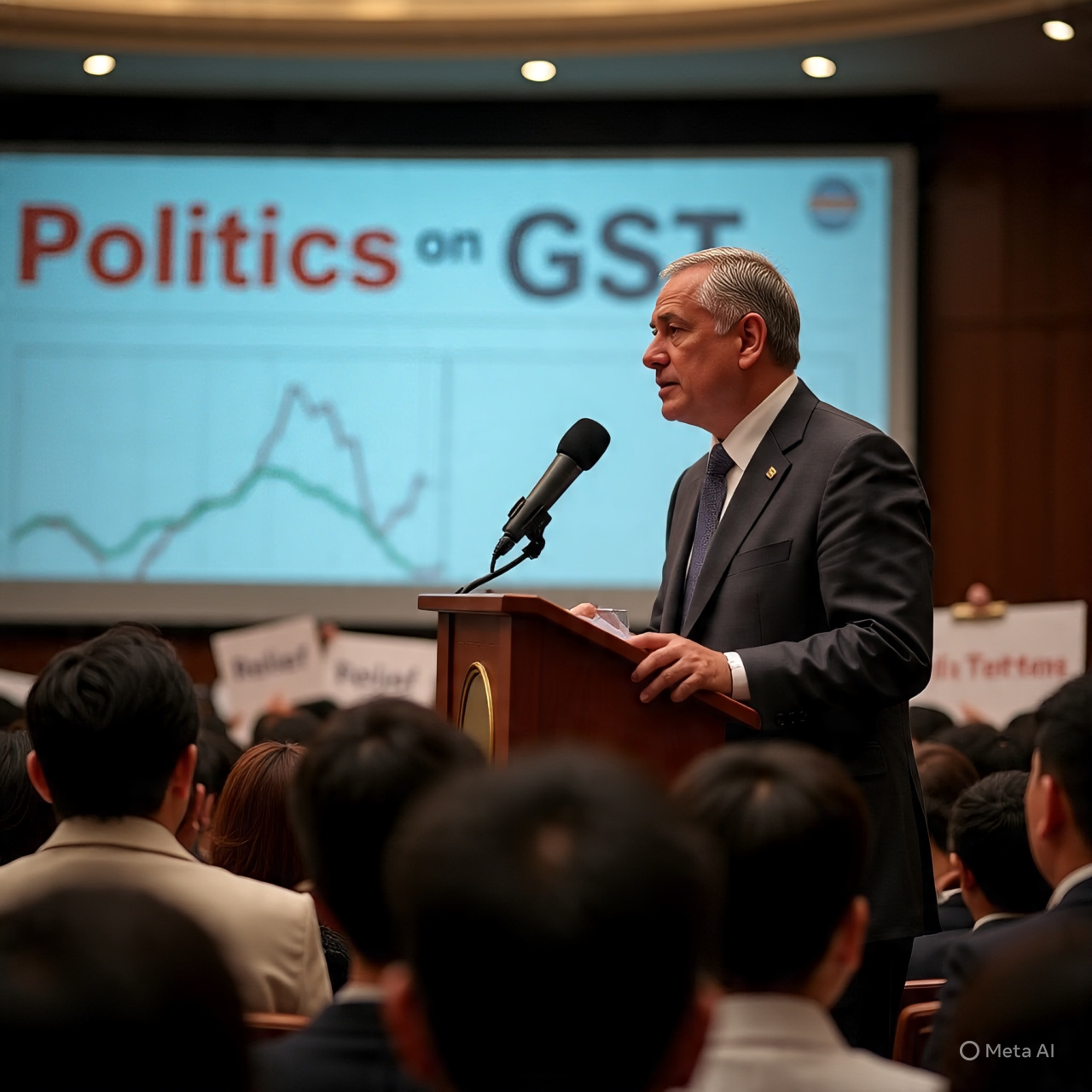
The reduction in GST rates is a sign of relief for the public, but the frequently changing arguments raise questions about the government’s policies.
After the implementation of GST, the government called high rates necessary for nine years and described their benefits. Now the same argument is being made in reverse for reducing rates. The tax relief that will be implemented from Navratri is certainly a positive message for consumers and the business world, but this contradiction in policies undermines public confidence. Instead of linking tax policy with politics or festivals, it is important to make it stable and fair in the long run, so that the true spirit of “one nation, one tax” can be meaningful.
– Dr. Satyavan Saurabh

GST or “Goods and Services Tax”, which was implemented in the Indian tax system in the year 2017, was considered a historic reform at the time. It was presented as a concept of “one nation, one tax” and the public was assured that it would simplify the tax system, curb corruption and provide convenience to businessmen. Right from the beginning, the government and its economic advisors justified the higher tax rates and said that it was in the national interest and in the long run, it would increase revenue, accelerate growth rate and also strengthen the states.
But in the last nine years, the public has seen that the burden of GST has only increased on the common consumer. Tax rates on essential items as well as daily necessities remained high. Inflation continued to rise and the budget of every household continued to deteriorate. The business community also complained at times that the complex system of GST and high tax slabs affected their business. Small and medium enterprises had to fight for their survival at times.
Now suddenly the same government is saying that GST rates will be reduced and this will give direct relief to the public. This announcement on the occasion of Navratri is being called the “Diwali of tax relief”. Certainly, this step is a message of relief for the common consumer. Reducing taxes on things like shoes, clothes, TV, DTH will have a direct impact on every family. People will be able to shop during the festivals and there will be more activities in the market. But the question arises that why the same arguments that were given earlier in support of high tax are being given today in support of reducing it?
This paradox is not limited to tax rates alone. It also raises questions about the government’s economic policy thinking. If high taxes were the basis for growth, how come lowering them after nine years suddenly became necessary for growth? And if lower taxes can actually provide relief to the market and the public, why did the public have to bear the burden of high taxes for so many years?
The common citizen wants answers to these questions. He is seeing that tax policies are changed many times due to politics and election tactics. Announcing tax cuts on the occasion of festivals certainly attracts people, but is it a long-term solution? Changing tax policy from time to time and saying each time that it is in the public interest raises questions on transparency and credibility.
Today when the government says that reducing taxes will strengthen the economy, it is true. When the tax burden is reduced, the purchasing power of the people increases, consumption increases and the market becomes vibrant. This increases production and also creates employment. But then the same question arises – what purpose was served by keeping taxes high for so many years? During that time, did the public become just a revenue collection machine?
The truth is that in a developing country like India, tax policy should not only be a means of revenue collection, but it should also be the basis of socio-economic balance. The tax burden on essential goods and daily use items should be kept to a minimum so that the poor and the middle class can get relief. While relatively higher taxes can be levied on luxury items. But in the past years, we have seen that this balance has sometimes been disturbed and the pocket of the common citizen was directly affected.
It is also worth noting that tax relief also affects the government’s revenue. When revenue falls, the government either increases the deficit or recovers it from elsewhere. In such a situation, how much relief the public actually gets is also a big question. If the tax burden remains directly or indirectly on electricity, fuel, education and health services, the impact of tax reduction on other items will be limited.
The dream of “One Nation, One Tax” as portrayed in the name of GST is still incomplete. Different slabs on different items, complaints from states, complicated return filing and frequent changes in rules, all these are making it complicated. Now that the decision to reduce tax rates has been taken, there is a need to make it not a relief limited to festivals only, but to make the entire system stable and balanced.
The government should set tax policies above politics and with a long-term economic perspective. People should feel that taxes are actually their contribution to nation building, not just a burden. Therefore, it is important that the revenue generated from taxes is used properly and transparently. If the public sees that the taxes they pay are being used on education, health, employment and infrastructure, they will not hesitate to pay taxes.
Today’s tax relief should be welcomed, but it is also important to raise the question of whether it is just a quick attraction or the beginning of a long-term reform. Instead of linking a major reform like GST with politics and electoral gains, it should be pursued in the real interest of the public and the economy. Only then will the “Diwali of Tax Relief” truly bring light to the lives of every citizen.
, Dr. Satyavan Saurabh,
Research scholar in political science, Delhi University,
Poet, freelance journalist and columnist,
(Mob.) 01255281381 (Talk)
(Mob.) 94665-26148 (Chat + WhatsApp)
Facebook-https://www.facebook.com/saty.verma333
Twitter- https://twitter.com/SatyawanSaurabh

