

Amir Suhail Wani
Introduction: Beyond a False Dichotomy
Srinagar 07 Jul : The relationship between the Qur’an and modern science has, over the last century, become one of the most contested subjects in contemporary Islamic thought. Few issues have generated such enthusiasm among apologists and such scepticism among critics. For some, every new scientific discovery appears to confirm a verse of the Qur’an, transforming revelation into an encyclopaedia of embryology, cosmology, geology, and astrophysics. For others, the advance of science steadily diminishes the intellectual relevance of religion, relegating scripture to the margins of human knowledge. Between these two extremes lies a growing body of scholarship that questions the very assumptions upon which this debate has been constructed. Is the Qur’an truly a scientific textbook awaiting modern verification? Does science possess the epistemological authority to validate or invalidate revelation? Or are both science and religion fundamentally different modes of knowing, each addressing dimensions of reality inaccessible to the other?
These questions are neither trivial nor merely academic. They shape the intellectual self-understanding of Muslim societies, influence educational priorities, and determine whether religion is viewed as an ally or adversary of scientific progress. Yet much of the contemporary discussion proceeds from a remarkably unexamined assumption—that science constitutes the supreme and final arbiter of truth. Once this premise is accepted, the debate becomes predictable. Believers seek scientific confirmation for scripture, while sceptics dismiss scriptural claims that appear incompatible with prevailing scientific theories. In both cases, science functions as the unquestioned standard before which revelation must either defend itself or concede defeat. The irony is striking: the apologetic and the sceptic share the same epistemological commitment. They disagree only about the verdict.
Such a framework, however, is philosophically inadequate. Before asking whether the Qur’an agrees with science, one must first ask a prior and more fundamental question: What is science? Is science an infallible repository of objective truths, or is it a historically evolving human enterprise? Does it exhaust the possibilities of knowledge, or does it represent one among several legitimate modes of understanding reality? Unless these foundational questions are addressed, every subsequent discussion about religion and science remains conceptually incomplete. It is therefore necessary to begin not with revelation but with epistemology—with the nature, scope, and limitations of human knowledge itself.
Modern civilization owes an immeasurable debt to science. Few achievements in human history rival the transformative power of scientific inquiry. Advances in medicine have eradicated diseases that once devastated civilizations. Astronomy has expanded the observable universe from a small celestial canopy into a cosmos spanning billions of galaxies. Physics has revealed astonishing dimensions of matter and energy invisible to ordinary perception. Chemistry has revolutionized agriculture and industry. Engineering has reshaped transportation, communication, and architecture. The scientific enterprise represents one of humanity’s greatest intellectual accomplishments, and any serious engagement with religion must acknowledge this without reservation. Yet admiration for science should not become an excuse for philosophical exaggeration. The extraordinary success of science in explaining natural phenomena does not automatically imply that it alone is competent to answer every meaningful question. To recognize the greatness of science is not to surrender to scientism.
Scientism is not science. Science is a disciplined method of investigating the empirical world through observation, experimentation, mathematical modelling, and critical verification. Scientism, by contrast, is a philosophical doctrine asserting that science alone provides genuine knowledge and that all other forms of inquiry are either inferior or ultimately reducible to scientific explanation. It is one thing to affirm that physics explains planetary motion; it is another to claim that physics can explain beauty, justice, moral obligation, religious experience, or the meaning of existence. The former is science; the latter is philosophy masquerading as science. Ironically, the proposition that “only scientific knowledge is valid” is itself not a scientific proposition. It cannot be demonstrated experimentally, measured empirically, or verified through laboratory procedures. It is a metaphysical assertion about the nature of knowledge and therefore belongs to philosophy rather than science. The first step toward a mature dialogue between the Qur’an and science is thus to distinguish science from the philosophical ideology often constructed around it.
Science and Religion: Distinct Modes of Knowing
The familiar observation that science deals with facts while religion deals with values has frequently been criticized as simplistic. Yet when carefully understood, it captures an essential distinction between two fundamentally different forms of inquiry. Science concerns itself primarily with what is. It investigates the structure of atoms, the behaviour of genes, the evolution of stars, the chemistry of living organisms, and the laws governing physical processes. Its questions are descriptive and explanatory. How does gravity operate? What causes disease? How old is the observable universe? What mechanisms underlie biological evolution? Such questions invite empirical investigation because they concern phenomena accessible to observation and experiment.
Religion, by contrast, asks questions that science, by its own methodology, cannot answer. Why ought one to be truthful? Is justice objectively good or merely socially convenient? What gives human life intrinsic dignity? Does existence possess purpose? What constitutes genuine happiness? Why should compassion be preferred to cruelty? Is there a reality beyond empirical existence? These are not scientific questions because they cannot be resolved by collecting additional data. No telescope, however powerful, can discover moral obligation among the stars; no microscope can isolate forgiveness within a human cell; no mathematical equation can determine whether love is preferable to hatred. Such questions belong to ethics, metaphysics, aesthetics, and spirituality—the traditional domains of religion and philosophy.
This distinction becomes even more illuminating when considered from the perspective of human nature itself. Science is fundamentally analytic. It advances by separating complex phenomena into measurable components, isolating variables, and identifying causal relationships. Reduction and specialization are among its greatest strengths. Religion, however, is synthetic. It seeks not merely to explain isolated aspects of reality but to integrate the diverse dimensions of human existence into a coherent vision of life. It addresses reason without neglecting imagination, cultivates moral discipline alongside intellectual conviction, and speaks simultaneously to the conscience, the emotions, and the will. If science primarily educates the intellect, religion seeks the harmonious development of the whole person. It concerns itself not only with what human beings know but with what they become.
This insight has profound implications. One cannot meaningfully criticize music because it fails to solve mathematical equations, nor dismiss mathematics because it does not produce poetry. Different disciplines possess different methods, different aims, and different standards of excellence. Likewise, it would be unreasonable to expect the Qur’an to function as a textbook of molecular biology, just as it would be unreasonable to expect biology to provide a theory of ultimate meaning. The two enterprises intersect because they concern the same universe, but they do so from different epistemological perspectives. Science investigates the mechanisms of creation; religion contemplates its purpose, value, and significance.
The Rise of Scientific Essentialism
The tendency to judge religion exclusively through scientific standards is largely a product of nineteenth-century intellectual history. The astonishing successes of physics, chemistry, and biology encouraged the belief that science represented not merely a method of inquiry but the final destiny of human reason. Under the influence of positivism, particularly the thought of Auguste Comte, many intellectuals imagined history as an inevitable progression from theological speculation to scientific certainty. Metaphysics was dismissed as meaningless, religion was reduced to psychology or sociology, and science was expected eventually to explain every aspect of existence. Human knowledge appeared to be advancing toward complete objectivity, free from historical contingency and philosophical presuppositions.
This confidence produced what may be called scientific essentialism—the conviction that science uniquely possesses objective access to reality and that its conclusions are independent of culture, history, interpretation, or conceptual frameworks. Nature was imagined as a vast machine whose immutable laws awaited complete discovery. Scientific knowledge accumulated steadily; objectivity was assumed to be absolute; progress was regarded as irreversible. Religion survived only insofar as it accommodated itself to scientific authority.
Yet this vision of science, immensely influential though it became, proved remarkably short-lived. During the twentieth century, philosophers of science began to examine scientific practice with unprecedented rigor. Their conclusions fundamentally transformed our understanding of science itself. Ironically, the greatest challenge to scientific essentialism came not from theologians defending revelation but from philosophers studying science on its own terms. Their work demonstrated that science is neither philosophically self-sufficient nor epistemologically absolute. Rather than diminishing science, these critiques revealed its true greatness: its openness to revision, its willingness to correct itself, and its refusal to claim finality. It is to these philosophers that we must now turn, for they permanently altered the intellectual landscape within which any contemporary discussion of the Qur’an and science must take place.
The Collapse of Scientific Essentialism: From Certainty to Humility
The confidence with which nineteenth-century positivism proclaimed the eventual triumph of science over every other form of knowledge now appears, in retrospect, to have been premature. It rested upon a conception of science that regarded scientific knowledge as cumulative, objective in an absolute sense, and progressively approaching an exhaustive description of reality. Nature was imagined as a perfectly intelligible machine, while the scientist assumed the role of a detached observer capable of discovering its laws without the interference of history, culture, language, or personal presuppositions. This conception of science exercised an immense influence upon modern civilization, shaping educational systems, political ideologies, and even theological discourse. It encouraged the belief that every genuine question would eventually receive a scientific answer and that disciplines such as philosophy, theology, ethics, and metaphysics would gradually dissolve into specialized branches of empirical inquiry. Yet the twentieth century witnessed a remarkable reversal. The most penetrating critics of this triumphalist image of science were not religious thinkers anxious to defend revelation, but philosophers, historians, and even scientists who had devoted themselves to understanding the actual practice of scientific inquiry. Their work did not undermine science; rather, it liberated science from philosophical dogmatism and restored to it the intellectual humility that genuine inquiry requires.
Among the most influential figures in this transformation was Karl Popper, whose philosophy decisively challenged the widespread assumption that science advances through the accumulation of verified truths. Popper observed that no scientific law, however frequently confirmed, can ever be regarded as conclusively established. Thousands of successful observations cannot logically demonstrate that a universal proposition is eternally true, for future observations may always disclose exceptions that compel its revision. Scientific certainty, therefore, remains an illusion. The greatness of science lies precisely in the opposite direction—in its willingness to expose every theory to the possibility of refutation. A proposition qualifies as genuinely scientific not because it has been verified beyond doubt but because it is capable, in principle, of being falsified by empirical evidence. Scientific theories are thus bold conjectures that survive repeated attempts at refutation. They are accepted provisionally, never absolutely. Popper’s philosophy transformed scientific inquiry from the pursuit of indubitable certainty into a disciplined practice of critical self-correction. Every theory carries within itself the possibility of its own replacement. The scientist does not proclaim final truth but offers the best available explanation while remaining intellectually prepared for its eventual revision.
The implications of this insight extend far beyond methodology. They fundamentally alter the epistemological status of scientific knowledge. If scientific theories remain permanently open to revision, then science cannot serve as an infallible tribunal before which all other forms of knowledge must justify themselves. Scientific knowledge possesses extraordinary reliability within its domain, but its conclusions remain provisional because reality continually exceeds the explanatory capacities of existing theories. This is not a weakness but a source of strength. Science progresses precisely because it refuses dogmatism. It institutionalizes criticism, welcomes anomalies, and recognizes that today’s consensus may become tomorrow’s historical curiosity.
The historical dimension of scientific inquiry was explored even more profoundly by Thomas Kuhn, whose monumental work The Structure of Scientific Revolutions permanently changed our understanding of scientific development. Prior to Kuhn, scientific progress was commonly imagined as a continuous accumulation of facts leading steadily toward objective truth. Kuhn demonstrated that the actual history of science is considerably more complex. Scientific communities operate within conceptual frameworks that he famously called paradigms. These paradigms determine not only which theories are accepted but also what questions are considered meaningful, what methods are regarded as legitimate, what counts as satisfactory evidence, and even what scientists perceive when they observe nature. Observation itself is never entirely neutral. Scientists approach reality through conceptual lenses fashioned by education, tradition, and disciplinary consensus.
Kuhn’s historical investigations revealed that periods of what he called “normal science” are punctuated by moments of profound intellectual crisis. As anomalies accumulate—phenomena that resist explanation within the prevailing paradigm—the confidence sustaining the existing framework begins to erode. Eventually, a scientific revolution occurs in which one paradigm is replaced by another that reorganizes the field according to entirely new conceptual assumptions. The transition from Aristotelian cosmology to Newtonian mechanics, from Newtonian physics to Einstein’s theory of relativity, and from classical determinism to quantum mechanics illustrates this process. Such revolutions involve far more than the correction of isolated errors. They represent transformations in the very way reality is conceptualized. Scientific progress therefore resembles a succession of changing worldviews rather than a linear accumulation of immutable truths. Kuhn did not deny scientific progress; rather, he demonstrated that progress itself is historically mediated. Scientific knowledge develops through paradigms that are themselves products of particular intellectual contexts. Objectivity remains an aspiration, but it is always pursued from within historically situated frameworks.
The philosophical consequences of Kuhn’s work were immense. If scientific paradigms themselves evolve, then scientific certainty becomes inseparable from history. Knowledge is never produced by abstract reason alone but by communities of inquiry whose assumptions, languages, instruments, and intellectual traditions shape what they are able to discover. This recognition does not collapse science into relativism, as some critics have alleged. Rather, it reminds us that human inquiry, however rigorous, remains an activity undertaken by finite beings situated within history. Science achieves objectivity through disciplined communal criticism, replication, and openness to revision—not through transcendence of the human condition.
An even more provocative challenge emerged in the writings of Paul Feyerabend. If Popper questioned certainty and Kuhn questioned continuity, Feyerabend questioned methodological absolutism itself. The popular image of science often assumes the existence of a single universal scientific method whose consistent application inevitably produces reliable knowledge. Feyerabend argued that the history of science simply does not support this belief. Examining episodes from the Scientific Revolution to twentieth-century physics, he observed that many of the greatest scientific advances occurred precisely because creative thinkers departed from accepted methodological rules. Galileo’s defence of heliocentrism, for example, involved rhetorical strategies and conceptual innovations that violated prevailing standards of scientific argumentation. Einstein’s theories likewise emerged not through mechanical adherence to established procedures but through profound imaginative reconstruction of physical reality. Scientific creativity repeatedly flourishes by transcending methodological orthodoxy rather than submitting unquestioningly to it.
Feyerabend’s celebrated expression “anything goes” has frequently been caricatured as an invitation to intellectual chaos. Such interpretations miss the deeper philosophical intention of his work. He did not deny the importance of evidence, rationality, or disciplined inquiry. Rather, he opposed the transformation of scientific methodology into an ideological orthodoxy. His argument was fundamentally pluralistic. Human understanding advances through diversity of methods, conceptual innovation, and intellectual freedom. Science itself has prospered precisely because it has never been confined to a single immutable procedure. To reduce scientific inquiry to one timeless method is to misunderstand its own history. The vitality of science lies not in methodological rigidity but in its capacity for continual reinvention.
The critique of scientific essentialism was further enriched by philosophers whose contributions, though less widely known outside academic circles, proved equally significant. Michael Polanyi demonstrated that scientific inquiry always contains a tacit dimension that cannot be fully formalized. Every scientist relies upon forms of judgment, intuition, practical skill, and intellectual commitment that exceed explicit methodological rules. Knowledge is therefore never wholly impersonal. The scientist participates in discovery through disciplined imagination as much as through detached calculation. This insight challenged the ideal of complete objectivity that had dominated positivist thought. Similarly, Imre Lakatos replaced simplistic models of hypothesis testing with the richer concept of competing research programmes, each possessing a central theoretical core protected by auxiliary assumptions. Scientific communities often preserve theories despite apparent anomalies, not because they are irrational but because temporary difficulties may eventually yield to deeper explanatory advances. The actual practice of science proves considerably more subtle than textbook descriptions suggest.
These philosophical developments collectively transformed our understanding of science. They revealed that science is not a static collection of immutable facts but a living, self-correcting tradition of inquiry. Scientific theories arise within historical contexts, employ conceptual frameworks shaped by human communities, evolve through criticism and revision, and remain perpetually open to replacement by superior explanations. The authority of science rests not upon infallibility but upon disciplined fallibilism. Its greatness consists precisely in its refusal to claim finality.
This realization carries profound implications for discussions concerning religion and revelation. If science itself acknowledges the provisional status of its theories, then it becomes philosophically hazardous to interpret sacred scripture exclusively through the lens of contemporary scientific paradigms. Throughout modern history, theories once regarded as virtually unquestionable have undergone substantial modification or complete abandonment. The Newtonian conception of an absolute universe yielded to relativity. Classical determinism gave way to quantum indeterminacy. The steady-state cosmological model was displaced by Big Bang cosmology. Even within evolutionary biology, genetics, neuroscience, and cosmology, vigorous debates continue regarding the interpretation of evidence, the adequacy of prevailing models, and the philosophical assumptions underlying scientific explanation. Scientific vitality depends upon precisely this openness. Its conclusions remain permanently corrigible because inquiry itself never reaches a final terminus.
This point deserves particular emphasis because contemporary discussions of the Qur’an frequently proceed as though present scientific theories represent immutable certainties. When interpreters identify specific Qur’anic verses with current cosmological or biological models, they unknowingly bind the permanence of revelation to the contingency of scientific history. Should those theories later undergo revision—as scientific theories regularly do—the scriptural interpretation becomes unnecessarily vulnerable. Such vulnerability does not arise from the Qur’an itself but from an unwarranted hermeneutical strategy that mistakes provisional scientific models for timeless metaphysical truths. The problem, therefore, lies not in science but in scientistic readings of scripture.
Recent discussions within cosmology illustrate this point with particular clarity. Without denying the remarkable explanatory success of the prevailing cosmological model, several distinguished physicists, including Roger Penrose, Heinrich Päs, and Sabine Hossenfelder, have explored conceptual limitations, unresolved puzzles, and possible alternatives concerning aspects of contemporary cosmology. Their work does not demonstrate that the Big Bang model has been discarded; indeed, it remains the dominant framework within modern cosmology. What their work does demonstrate is something philosophically more significant: even the most successful scientific theories remain open to refinement, reinterpretation, and, where warranted, eventual replacement. Science possesses no sacred cows. Its intellectual courage lies precisely in its readiness to question even its most successful paradigms.
This recognition prepares us to approach the Qur’an with greater philosophical maturity. The purpose of revelation cannot reasonably be understood as furnishing humanity with scientific theories destined for periodic revision. Its concern lies elsewhere. It addresses dimensions of existence that no scientific revolution can either establish or abolish: the meaning of justice, the cultivation of virtue, the discipline of the soul, the consciousness of God, and the moral responsibilities that accompany human freedom. To understand this distinction is not to diminish science but to liberate both science and revelation from burdens they were never intended to bear. Only then can an authentic dialogue between them begin.
The Limits of Reason: Kant, Al-Ghazali and Iqbal; The Qur’an as Guidance, Not Science
The modern conflict between science and religion has often been intensified by an exaggerated confidence in the power of reason. Since the European Enlightenment, many intellectuals have assumed that human reason, aided by empirical science, is capable of answering every meaningful question. The astonishing achievements of modern science—from decoding the human genome to exploring distant galaxies and manipulating the quantum world—have undoubtedly reinforced this confidence. Yet the greatest philosophers, both within and outside the religious tradition, have consistently reminded humanity that reason itself has limits. Science is extraordinarily powerful, but it is not omnipotent. It excels in investigating measurable phenomena, establishing causal relationships, formulating predictive models, and uncovering the mechanisms through which the physical universe operates. It does not, however, possess the methodological tools required to determine why there is a universe rather than nothing, whether beauty possesses objective reality, whether moral obligations are binding, whether consciousness can be exhaustively reduced to neural activity, or whether human existence possesses an ultimate purpose. These questions do not disappear simply because science cannot answer them. Rather, they indicate that reality is richer than what can be measured in laboratories. The distinction is not between rationality and irrationality, but between different domains of rational inquiry.
Perhaps no modern philosopher articulated the limits of reason more profoundly than Immanuel Kant. While deeply committed to reason, Kant demonstrated that reason itself inevitably encounters questions that transcend empirical verification. In his Critique of Pure Reason, he argued that the human mind does not merely receive information passively but actively structures experience through categories such as space, time, and causality. Consequently, human knowledge is confined to phenomena—the world as it appears to us—while the noumenal reality, things as they are in themselves, remains inaccessible to pure theoretical reason. Kant did not reject God, freedom, or immortality; rather, he argued that these realities cannot be either scientifically demonstrated or scientifically disproved. They belong to a different order of knowledge. Ironically, therefore, one of the greatest champions of Enlightenment reason simultaneously dismantled the Enlightenment illusion that reason alone could answer every ultimate question. Kant’s philosophy leaves open a legitimate space for faith, ethics, and metaphysical reflection without undermining the integrity of scientific inquiry. Science remains supreme within its proper domain, but its authority cannot be extended into areas where its methods simply do not apply.
Long before Kant, the Muslim intellectual tradition had wrestled with remarkably similar questions. Abu Hamid al-Ghazali is frequently caricatured as the thinker who destroyed science within Islamic civilization. Such portrayals are historically simplistic and philosophically inaccurate. Al-Ghazali did not reject mathematics, medicine, astronomy, or logic; indeed, he regarded these disciplines as valuable and necessary. His criticism was directed primarily against philosophers who claimed certainty in metaphysical matters through unaided reason. In The Incoherence of the Philosophers, he questioned whether philosophical reasoning could conclusively establish propositions regarding eternity, causality, or divine action. His famous critique of necessary causation argued that what humans observe are constant conjunctions rather than logically necessary connections. Fire appears to burn cotton every time, but observation alone cannot establish that fire possesses an intrinsic, necessary power to burn. The event occurs because God sustains the regularities of nature. Centuries later, David Hume would raise strikingly similar doubts regarding causality, arguing that necessity cannot be directly observed but is inferred through habit. Modern philosophy of science, particularly after Karl Popper, similarly recognizes that scientific laws are provisional models supported by evidence rather than absolute certainties. Ironically, the philosophical skepticism for which Al-Ghazali was criticized later became an integral feature of modern scientific methodology itself.
The nineteenth and twentieth centuries witnessed another remarkable attempt to redefine the relationship between faith and reason through the thought of Muhammad Iqbal. Unlike those who viewed science as a threat to religion, Iqbal regarded scientific inquiry as an expression of the Qur’anic spirit itself. He repeatedly emphasized that Islam encourages observation, experimentation, reflection, and engagement with nature. Yet he was equally critical of scientism—the philosophical belief that science alone constitutes genuine knowledge. In The Reconstruction of Religious Thought in Islam, Iqbal argued that reality cannot be fully comprehended through sense perception alone. Human experience includes aesthetic intuition, moral consciousness, religious awareness, and spiritual insight, all of which reveal dimensions of existence inaccessible to purely empirical investigation. He admired modern physics precisely because it had already begun to undermine the rigid materialism of nineteenth-century science. Quantum theory, relativity, and developments in modern cosmology demonstrated that reality is more subtle, relational, and dynamic than classical materialism had imagined. For Iqbal, therefore, science and religion are complementary movements of the human intellect. Science investigates the external world through observation and experiment; religion investigates the inner world through reflection, moral discipline, and spiritual experience. Both seek truth, but they approach different aspects of reality through different methods.
This distinction becomes especially important when interpreting the Qur’an itself. Contemporary discussions frequently attempt either to transform the Qur’an into a modern scientific textbook or to dismiss it because it does not conform to contemporary scientific language. Both approaches misunderstand the nature of revelation. The Qur’an never claims to be a manual of physics, chemistry, biology, or astronomy. It describes itself repeatedly as guidance (hudā), a criterion (furqān), a reminder (dhikr), a mercy (raḥmah), and a healing for the human heart. Its central concern is the moral and spiritual transformation of individuals and societies rather than the systematic exposition of natural science. When the Qur’an directs attention to mountains, stars, rain, embryos, animals, oceans, or the alternation of night and day, its purpose is not to provide technical scientific explanations but to awaken wonder, gratitude, humility, and reflection. Nature is presented as a collection of āyāt—signs pointing beyond themselves toward a deeper reality. The scientific mechanisms underlying these phenomena may change with advancing knowledge, but their symbolic and spiritual significance remains enduring. The Qur’an invites human beings to observe creation carefully, yet it consistently redirects observation toward ethical responsibility and awareness of the Creator.
Recognizing this purpose prevents both literalism and scientific concordism. Literalism mistakes metaphorical or phenomenological language for technical description, while concordism attempts to validate revelation by discovering modern scientific theories hidden within ancient verses. Both approaches inadvertently subordinate the Qur’an to scientific paradigms that themselves remain historically contingent. Scientific theories evolve continuously through revision, refinement, and occasionally revolutionary transformation. If the authority of scripture becomes dependent upon the current state of scientific knowledge, then religious certainty becomes vulnerable to every future scientific revision. A wiser approach recognizes that revelation and science operate at different yet complementary levels. Science explains mechanisms; revelation explains meaning. Science investigates efficient causes; religion addresses ultimate causes and moral ends. Science can explain how stars are formed, but not why beauty moves the human soul when contemplating a star-filled sky. It can explain the neurochemistry of compassion without determining why compassion ought to be preferred over cruelty. It can prolong human life without explaining what makes life worth living. These questions belong not to the laboratory but to philosophy, ethics, and religion.
Islamic Civilization and Science; Ibn Sina, Ibn Rushd, Al-Biruni, Ibn al-Haytham; Ziauddin Sardar, Seyyed Hossein Nasr
One of the strongest historical arguments against the alleged incompatibility between Islam and science is not found in philosophical speculation but in the lived experience of Islamic civilization itself. If the Qur’an were fundamentally hostile to rational inquiry or empirical investigation, one would expect Muslim societies to have remained intellectually stagnant from the very beginning. History tells an altogether different story. Between the eighth and the fourteenth centuries, the Islamic world became the principal center of scientific learning, philosophical reflection, medical innovation, and technological advancement. From the libraries of Baghdad and the observatories of Maragha to the universities of Cordoba, Cairo, and Samarkand, Muslim scholars cultivated an intellectual culture in which revelation and reason were not perceived as enemies but as complementary paths to truth. The Qur’anic injunctions to reflect (tafakkur), observe (nazar), ponder (tadabbur), and seek knowledge (‘ilm) created a civilizational ethos that regarded the investigation of nature as an act of intellectual devotion rather than a challenge to faith. It is therefore historically inaccurate to imagine Islam as a religion that reluctantly accommodated science; rather, science emerged organically within a worldview that regarded the universe as a coherent and intelligible manifestation of divine wisdom.
Among the towering figures of this civilization stands Ibn Sina, whose contributions to medicine, metaphysics, psychology, and natural philosophy profoundly influenced both the Islamic world and medieval Europe. His monumental work, the Canon of Medicine, remained a standard medical text in European universities for several centuries, illustrating the extraordinary scientific sophistication achieved under Islamic patronage. Yet Ibn Sina never perceived a contradiction between his philosophical investigations and his religious commitments. For him, the universe was an ordered whole governed by rational principles because it originated from the Divine Intellect. The very possibility of scientific inquiry presupposed that nature was intelligible rather than chaotic. His confidence in reason was not independent of his faith but nourished by a worldview in which both revelation and rationality ultimately derived from the same divine source. Although later theologians disagreed with aspects of his metaphysics, his scientific legacy demonstrates that Islamic civilization nurtured a spirit of inquiry that transcended simplistic binaries between religion and science.
Equally significant was Ibn Rushd, known in the Latin West as Averroes, whose writings became instrumental in shaping European scholasticism. Ibn Rushd vigorously defended the harmony between revelation and philosophy, arguing that apparent conflicts arise not because truth contradicts truth but because scripture and reason operate through different modes of discourse intended for different audiences. His celebrated work The Decisive Treatise maintained that philosophical investigation is not merely permissible but, for those intellectually equipped, religiously commendable. Since the Qur’an repeatedly commands believers to reflect upon creation, rational inquiry into nature becomes an extension of obedience to revelation rather than its negation. Ibn Rushd’s confidence in reason did not diminish the authority of scripture; instead, it emphasized that properly interpreted revelation cannot contradict demonstrative knowledge. This insight remains strikingly relevant today, when debates surrounding science and religion frequently arise from literalist readings on one side and reductionist assumptions on the other.
The remarkable empirical spirit of Islamic civilization finds perhaps its finest embodiment in Al-Biruni. Unlike many scholars of his era, Al-Biruni insisted upon careful observation, precise measurement, comparative analysis, and intellectual honesty. His studies ranged across astronomy, geography, mineralogy, pharmacology, mathematics, anthropology, and comparative religion. His calculations concerning the Earth’s radius approached astonishing levels of accuracy considering the instruments available during his lifetime. Equally noteworthy was his methodological commitment to understanding other civilizations sympathetically before evaluating them. His celebrated study of India remains one of the earliest examples of rigorous comparative cultural scholarship. Al-Biruni repeatedly demonstrated that genuine scholarship demands freedom from prejudice, careful verification of evidence, and openness to revising conclusions when warranted by observation. Such intellectual virtues are entirely consistent with the Qur’anic insistence upon justice, truthfulness, and avoidance of conjecture. His work illustrates that scientific excellence flourishes most effectively when accompanied by humility rather than dogmatism.
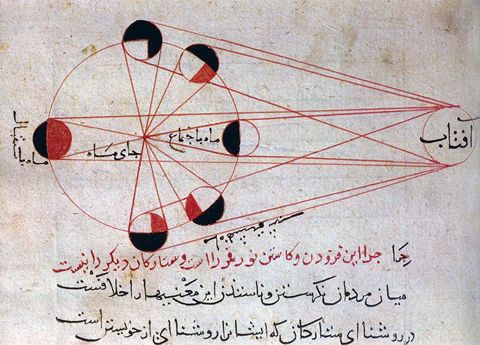
No discussion of Islamic science would be complete without acknowledging Ibn al-Haytham, often celebrated as one of the pioneers of the modern experimental method. His investigations into optics transformed the understanding of vision by demonstrating that light travels from objects to the eye rather than emanating from the eye itself. More significant than any single discovery, however, was his methodological revolution. Ibn al-Haytham emphasized systematic experimentation, mathematical analysis, reproducibility, and skepticism toward inherited authority. He famously advised scholars to question even the opinions of celebrated predecessors and to submit every claim to empirical verification. Such intellectual discipline anticipated principles that later became central to modern scientific practice. Yet Ibn al-Haytham viewed his scientific investigations not as exercises in secular autonomy but as means of appreciating the precision, order, and harmony embedded within creation. His work powerfully refutes the misconception that empirical science emerged only after Europe abandoned religion. The foundations of experimental inquiry were substantially enriched by scholars whose scientific pursuits were deeply embedded within a religious worldview.
The historical achievements of Islamic civilization, however, should not become grounds for nostalgic triumphalism. The fact that Muslim societies once led the world in scientific innovation does not automatically explain why many contemporary Muslim-majority societies struggle to sustain comparable levels of scientific productivity. This question has occupied numerous modern Muslim intellectuals who have sought to recover not merely the achievements but the intellectual spirit that produced them. Among the most influential is Ziauddin Sardar, who argues that contemporary Muslim engagement with science must move beyond both uncritical imitation of Western models and romantic glorification of the past. Sardar contends that science is never entirely value-neutral; every scientific enterprise is shaped by cultural assumptions, ethical priorities, economic structures, and civilizational goals. Consequently, Muslim societies should not merely consume scientific knowledge but participate in shaping its ethical direction. Questions concerning artificial intelligence, biotechnology, environmental degradation, surveillance technologies, and ecological sustainability cannot be answered by technical expertise alone. They require moral frameworks capable of directing scientific power toward human flourishing rather than domination. In this respect, the Islamic intellectual tradition possesses significant ethical resources that can contribute meaningfully to global conversations about the future of science.
A complementary perspective emerges in the writings of Seyyed Hossein Nasr, who has consistently argued that the contemporary ecological and spiritual crises of modern civilization stem partly from the desacralization of nature. According to Nasr, traditional Islamic cosmology regarded the natural world not as inert matter available for unlimited exploitation but as a sacred trust reflecting divine attributes. Every element of creation possessed symbolic significance, inviting contemplation of its Creator. Modern scientific civilization, while extraordinarily successful in technological terms, often reduced nature to a collection of resources measurable solely in terms of utility and economic value. Nasr does not reject modern science; rather, he calls for its reintegration within a broader metaphysical vision that recognizes the intrinsic dignity of creation. Such a perspective resonates deeply with Qur’anic teachings concerning human stewardship (khilāfah), balance (mīzān), and responsibility toward the natural world. At a time when climate change, biodiversity loss, and environmental degradation threaten the future of humanity, this spiritual understanding of nature offers an indispensable corrective to purely instrumental approaches.
The historical experience of Islamic civilization, therefore, provides a valuable lesson for contemporary debates about science and religion. The greatest Muslim scientists were neither religious obscurantists nor secular materialists. They inhabited an intellectual universe in which faith inspired curiosity, philosophy refined understanding, and scientific investigation deepened appreciation of the Creator’s wisdom. They neither transformed scripture into a scientific textbook nor imagined that scientific explanation rendered revelation unnecessary. Instead, they recognized that different forms of knowledge illuminate different dimensions of reality. Their legacy challenges modern readers to transcend the false dichotomy that continues to dominate popular discourse.
Ultimately, the relationship between the Qur’an and science cannot be adequately understood through simplistic claims of conflict or simplistic claims of miraculous scientific prediction. The Qur’an is neither a laboratory manual nor an encyclopedia of physics, biology, or cosmology. Its purpose is infinitely more profound. It seeks to shape morally responsible human beings, awaken spiritual consciousness, cultivate justice, inspire compassion, and direct humanity toward the ultimate meaning of existence. Science, by contrast, investigates the mechanisms through which the natural world operates, constantly refining its theories through observation, experimentation, and critical inquiry. These are not rival enterprises competing for intellectual territory but complementary dimensions of the human search for truth. Science reveals the remarkable order of creation; revelation discloses the significance of that order. Science expands human power; religion seeks to guide its responsible use. Science answers many questions of how; religion persistently asks why and to what end. A mature civilization requires both.
The enduring wisdom of the Qur’an lies not in anticipating every future scientific discovery but in cultivating the intellectual virtues that make genuine discovery possible—curiosity, humility, honesty, gratitude, and reverence before the mystery of existence. When science remains faithful to its empirical discipline and religion remains faithful to its ethical and spiritual vocation, neither diminishes the other. Instead, they converge in the shared human pursuit of truth, each illuminating dimensions of reality that the other alone cannot fully comprehend. Such a vision is not merely an intellectual compromise; it is a civilizational imperative for an age that possesses unprecedented scientific power yet continues to search, perhaps more urgently than ever, for wisdom, meaning, and moral direction.
The enduring contribution of thinkers such as Kant, Al-Ghazali, and Iqbal lies precisely in their refusal to absolutize any single mode of knowing. Each, in his own intellectual context, challenged the arrogance that arises whenever reason mistakes itself for omniscience. Their work reminds us that intellectual humility is itself a condition for genuine knowledge. Science flourishes when it remains faithful to empirical investigation without claiming metaphysical finality. Religion flourishes when it remains faithful to its spiritual and ethical mission without pretending to replace scientific inquiry. The Qur’an neither discourages scientific exploration nor seeks legitimacy through scientific prediction. Instead, it cultivates a worldview in which the pursuit of knowledge becomes an act of worship, the study of nature becomes a means of appreciating divine wisdom, and the search for truth encompasses both the observable universe and the deeper questions of existence that no microscope or telescope can finally resolve. This integrated vision offers a more balanced and intellectually satisfying alternative to both dogmatic scientism and uncritical religious literalism, preparing the ground for a richer conversation about scientific concordism, the Big Bang debates, and broader models for understanding the relationship between science and religion.

