

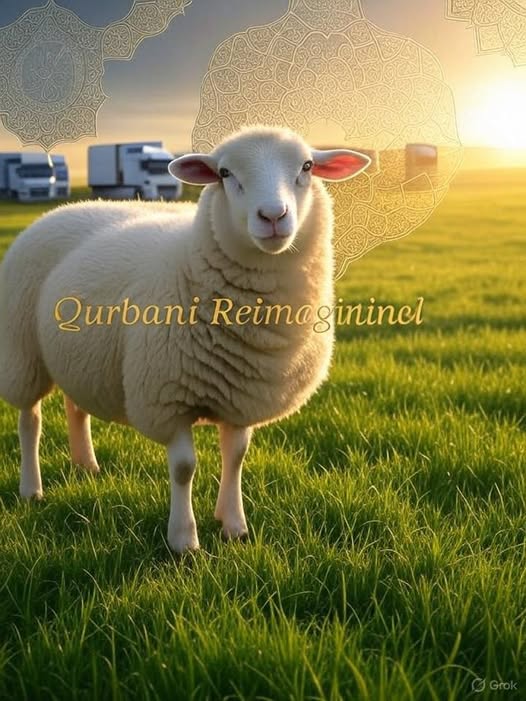
Sustainable Sacrifice for Year-Round Compassion, From Ritual to Revolution in Compassion
By Dr Fiaz Maqbool Fazili
The Commandment and Its Spirit-Qurbani, the sacred act of animal sacrifice performed during Eid al-Adha, stands as a profound religious obligation for Muslims worldwide. It is a tangible commandment from Allah, echoing the unwavering faith and submission of Prophet Ibrahim (AS). While the physical act of sacrifice is central, the distribution of its meat – sharing blessings with the poor and needy – is an equally vital pillar, embodying the spirit of compassion, gratitude, and social solidarity intrinsic to Islam. Yet, the traditional model of immediate, often localized distribution, while noble, faces limitations in maximizing this divine mandate’s year-round impact and ensuring absolute fairness. This piece proposes that by embracing organised scientific preservation and strategic, need-based distribution – without compromising a single Sharia guideline – we can elevate Qurbani from a seasonal act to a sustained force against hunger and hardship, fulfilling its purpose more completely and equitably.
The Challenge: Seasonality, Scarcity, and the Shadow of Favouritism. Currently, the immense blessing of Qurbani meat is concentrated within a few days. This creates significant challenges:1. Logistical Overload: Organizations and individuals face immense pressure to slaughter, process, and distribute vast quantities of meat within a very short timeframe, without proper organised facility of collection and preservation at least from the one third of sacrificed meat increasing the risk of waste or suboptimal handling and maldistribution.2. Seasonal Help vs. Chronic Needed: Hunger and poverty are relentless, year-round realities. Concentrating this vital protein source solely around Eid means its life-sustaining benefits are absent for the needy during the remaining months. Once sacrifice is complete religiously , the one third part Or more could be collected by registered NGOs against a payment , treated and preserved hygienically and scientifically then slowly transported to areas periodically which they need most 7x 365 . There is a place of delaying distribution of Udhoya (sacrificed)meat as scholars opine. 3. The Peril of Favouritism: Despite clear Islamic injunctions for fair and equitable distribution prioritizing the most vulnerable (Quran 22:28, 22:36), the reality on the ground can sometimes fall short. Instances of meat disproportionately reaching “in-laws,” neighbours, VIPS or favoured groups, getting more in quantity and quality amount ,size and kidneys, liver vary ) rather than the objectively poorest, undermine the very essence of the obligation. This not only deprives the most deserving but also risks diminishing the spiritual reward for the donor.
The Solution: Science Serving Sunnah – Preservation as a Tool for Equity—The core proposition is simple yet transformative: Preserve the Qurbani meat scientifically and distribute it strategically throughout the year based on verified need. This approach is not only feasible but aligns perfectly with the objectives of Sharia (Maqasid al-Shari’ah) – preserving life, wealth, and justice.
1. Modern Preservation: Ensuring Safety and Longevity:Freezing:The cornerstone of this approach. Modern freezing technology allows Qurbani meat to be stored safely for extended periods (months) without significant loss of nutritional value or safety, provided best practices are followed. This is a well-established, Sharia-compliant method.Optimal Packaging: Meat must be portioned and packaged in airtight, freezer-safe vacuum-sealed bags or containers. This prevents freezer burn, dehydration, and contamination, preserving quality and taste.Stringent Temperature Control:Maintaining a consistent deep-freeze temperature (typically -18°C or lower) is non-negotiable for long-term safety and quality. Reliable cold chain infrastructure – from slaughterhouse freezers to transport and final storage – is essential. Organizations like UMRelief and Islamic Relief Worldwide already implement rigorous protocols in this regard.
2. Storage and Transportation: Maintaining the Cold Chain:Initial Cooling: After slaughter and processing, meat should be rapidly chilled in refrigerators or coolers before freezing. Secure Transport: Distribution requires insulated vehicles or containers equipped with adequate freezing or sufficient ice packs to maintain the critical low temperature during transit, preventing spoilage.Centralized, Monitored Storage:Establishing well-managed, hygienic central freezer facilities allows for bulk storage under controlled conditions, ready for planned distribution.
Strategic Distribution: Targeting Need, Eliminating Bias-Preservation is only half the solution. Its true power is unlocked by intelligent, equitable distribution:1. Needs-Based Allocation: Utilize established networks (mosques, charities,Dar al Uloom, NGo , community workers) to identify the chronically food-insecure – families facing malnutrition, widows, orphans, the disabled, refugees – not just those present on Eid day. Maintain updated, verified beneficiary databases.2. Phased Distribution:Release preserved meat strategically throughout the year, particularly during lean seasons, economic downturns, natural disasters, or before other significant religious occasions when needs may spike. This ensures a continuous lifeline of high-quality protein.3.Transparent Systems. Implement robust tracking and auditing mechanisms. Distributions should be documented, verifiable, and open to oversight to eliminate any possibility of favoritism or diversion. The focus must solely be on the level of need.4. Recipient Empowerment & Education: Provide clear instructions (verbally and in writing) to recipients on safe thawing and cooking practices for frozen meat. This maximizes its benefit and ensures safety.
Beyond Meat: Maximizing the Sacrifice – The Untapped Potential of Sheep(animal) Skins- The principle of maximizing benefit extends beyond the meat. The skins of sacrificed animals represent a significant, often underutilised resource:Ethical Procurement:Skins should be systematically collected immediately after slaughter under hygienic conditions.Value Addition: Instead of being sold cheaply or wasted, these skins can be professionally tanned and processed for better utilisation for garments and healthcare especially in critical areas .Compassionate Utilisation: The resulting leather can be transformed into durable, warm winter clothing for the poor, insulating rugs for those living in cold or damp conditions, or even specialised padding to prevent bedsores for the elderly and infirm in hospitals or care homes. This creates sustainable, year-round warmth, comfort, and dignity directly stemming from the Qurbani sacrifice, further amplifying its social impact.
Upholding the Spirit: Sharia Compliance at Every Step: Critically, this modernised approach strengthens adherence to core Islamic principles:Fulfilling the Obligation:The sacrifice itself is performed according to Sharia rules. Preservation and delayed distribution do not negate the act; they enhance its impact.Prioritising the Needy: Systematic, year-round distribution based on verified need ensures the poor and hungry are genuinely prioritized, fulfilling the Quranic command more effectively than potentially biased immediate distribution.Fairness and Equity: Transparent systems actively combat favoritism (wasta) and ensure every eligible recipient gets their fair share based on need, upholding Islamic justice.Preserving Blessings:Preventing spoilage through proper preservation is a duty (Amanah) regarding the wealth Allah has provided and the sacrifice offered in His name. Waste is contrary to Islamic teachings.Pure Intention (Niyyah): The intention remains pure – sacrificing solely for Allah’s pleasure and sharing His bounty with those in need. The method enhances the realization of that intention.It is not their flesh nor their blood that reaches Allah. It is only the piety on your part, the obedience and the faithfulness to the duties owed to Him.(QURAN)
Concerns based on available data, while no precise global figure exists for total Qurbani transactions, estimates suggest **$3–5 billion** is spent annually on sacrificial animals worldwide. However, significant inefficiencies persist:Financial Scale & Utilization Challenges:1.Global Reach – Major NGOs like **Xx Relief distribute meat to ~3 million people across 35 countries annually targets 250,000 beneficiaries in 2025, costing ~$150–$200 per animal.Wastage & Misdistribution: ~30–50%of Qurbani meat is lost or misallocated due to:Inadequate cold chains: UK studies confirm pathogen risks when meat exceeds 7°C during distribution. -Plastic pollution: Country X generates **124 million plastic bags** from Qurbani meat yearly, contaminating ecosystems. Favouritism: Local biases divert meat from the neediest, violating Islamic principles of equitable sharing. Skins undervalued: Most hides (worth ~$200–500 million globally) are discarded or sold cheaply instead of being repurposed for clothing/rugs for the poor. Conflict & Logistical Barriers: – In disaster or war zones, conflict areas, refrigeration shortages, storage, transportation, and unsafe routes delay deliveries, forcing meat to spoil despite high need . Refugee camps in Africa receive only 4,000–6,000 Qurbani shares yearly for 190,000+ people, highlighting coverage gaps.
Suggested Pathways to Improvement: Cold Chain Investment: Adopt refrigerated transport (as done by Islamic Relief ) and freezing for year-round distribution. Centralised Systems: Use verified beneficiary databases (e.g., Penny Appeal’s needs assessments) to replace ad hoc sharing. Skin Upcycling: Process hides into anti-bedsore rugs/warm clothing for vulnerable groups. Eco-Packaging: Replace plastic with bamboo/leaf wraps (per Indonesia’s MUI guidelines). Better coordination between NGOs, governments, and communities could redirect $1–2 billion worth of wasted resources** toward chronic hunger relief—aligning with Qurbani’s core objective: dignified, sustained aid for the most vulnerable.
From ritual to revolution in compassion, Qurbani is a timeless commandment, a symbol of faith and submission. However, the methodology surrounding the distribution of its immense blessings can evolve to meet contemporary challenges without diluting its sacred essence. By harnessing scientific preservation, establishing robust cold chains, implementing transparent needs-based distribution systems year-round, and maximizing the use of by-products like skins, we transform Qurbani from a powerful but fleeting gesture into a sustained engine of compassion and social justice. This approach directly tackles the pitfalls of seasonal scarcity and potential favouritism, ensuring that the divine mandate to feed the hungry is fulfilled more completely, fairly, and effectively. It allows the spirit of Ibrahim’s sacrifice to resonate not just for three days, but throughout the year, bringing warmth, sustenance, and dignity to the most vulnerable, in perfect harmony with the profound wisdom and objectives of Sharia. This is the better way – maximizing benefit, ensuring equity, and truly honouring the commandment of Qurbani. “Am I being unrealistically optimistic? That’s what Khazar wonders by Wular Lake.”
~The Author is a Surgeon at Mubarak hospital, Healthcare policy analyst, Certified Professional in Quality improvement in Hospitals can be reached at drfiazfazili@gmail.com

