

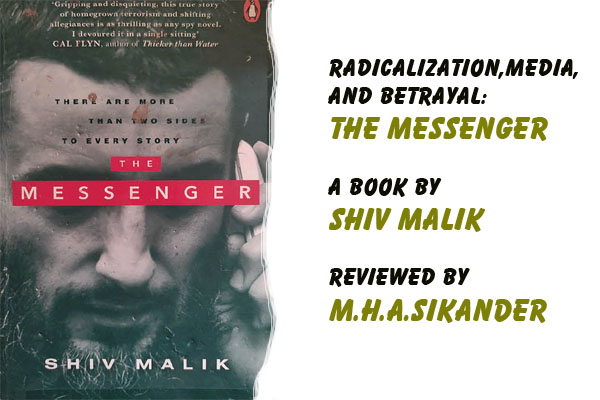
The Messenger: There are More than Two Sides to Every Story
Author: Shiv Malik
Publisher: Penguin Random House, India
Year of Publication: 2019
Pages: 321
Price: Rs 599
ISBN: 9780143449058
Shiv Malik’s “The Messenger: There are More than Two Sides to Every Story” is a profound investigative work that delves into the complex narratives surrounding terrorism, radicalization, and the fear that terrorism instills in society. The book revolves around Malik’s interaction with Hassan Butt, a man who initially glorified catastrophic events like 9/11 and the London 7/7 bombings but later claimed to have renounced extremism. Malik’s compelling narrative not only recounts Butt’s story but also exposes the murky interplay between media, terrorism, and the socio-political forces that shape these narratives.
The book begins against the backdrop of the 7/7 attacks in London in July 2005, a pivotal moment that intensified fear and hysteria across Britain and beyond. Malik focuses on areas like Birmingham and Manchester, particularly the neighborhood of Bourneville, where the suicide bombers originated. Through his journalistic inquiry, he traces the radicalization of one bomber, Mohammad Sidique Khan, an insightful case reflecting a wider trend among young British Asians feeling alienated from their parents’ traditional version of Islam and their cultural heritage. This alienation was compounded by their rejection of arranged marriages with cousins from their native lands, an act symbolizing their rebellion. These youths encountered racism and marginalization in schools and society, experiences that deeply influenced their path towards extremist ideologies, as they sought belonging and meaning amid perceived exclusion.
Hassan Butt’s story is central in understanding these dark undercurrents. Initially, Butt was a fervent supporter of acts of terror, glorifying the 9/11 attacks and even aspiring to martyrdom. His journey from a radical extremist to a self-proclaimed moderate is complex and revealing. Butt’s upbringing was marked by familial strife—his father’s incarceration, pressures of forced religious conformity like sons enforcing hijab on their mother, and the breakdown of his own marriage due to deceptive actions by his wife’s parents. At university, Butt became deeply involved in Islamic activism, often clashing with other Islamic groups, and he forged connections with radical preachers and groups such as Al-Muhajirun, noted for their extremist positions. His experience underscores how personal conflicts, identity crises, and community dynamics can entangle with broader radical ideologies.
Malik’s interactions with Butt take a darker turn as he uncovers troubling contradictions in Butt’s narrative. Butt claimed to have been deeply embedded in extremist networks, funded terrorism, and recruited individuals for jihadi causes, even charging journalists for exclusive interviews, with some funds apparently coming from American sources. Yet as Malik digs deeper, he finds that Butt’s accounts are exaggerated or fabricated. The bombings in Pakistan targeting Western interests initiated a shift in Butt, prompting doubts about his previous allegiance. His meeting with Muslim reformer Irshad Manji was another critical moment, although it ended with Butt being attacked and stabbed, illustrating the volatility surrounding his attempt to realign himself away from extremism. His efforts to develop a peaceful interpretation of Islam faced significant challenges, revealing the difficulty of breaking away from radicalism once entrenched.
The climax of the book presents a shocking twist when Butt is arrested and later admits that much of his story was a concoction. Malik, who had invested years in ghostwriting Butt’s account, is left betrayed and disillusioned. The experience causes Malik to temporarily abandon journalism, confronting the moral and professional implications of being deceived by a source he had once trusted implicitly. Malik reflects on the broader implications for media and society—how fear, hysteria, and sensational narratives about terrorism fuel divisions and allow myths and contradictions to flourish. The book challenges readers to question where trust lies—in governments, media, or disenfranchised individuals spinning self-serving myths—and how these stories shape public perception and policy in the post-9/11 world.
“The Messenger” ultimately is more than a personal or journalistic saga; it is a penetrating exploration of the machinery behind terror narratives and the human dramas embedded within. Malik uses Butt’s double life to illustrate the pitfalls of simplistic narratives about terrorism and the real suffering caused by fear and misinformation. The book contends that terrorism’s messengers—whether violent extremists or those who tell their stories—play a crucial role in perpetuating fear, and that understanding these stories requires peeling back layers of identity, betrayal, and ambition. Malik’s journey reveals a world where extreme ideals collide with harsh realities, exposing how the search for meaning and justice can be manipulated to devastating effect.
The narrative also highlights the social context of British Asian communities in the aftermath of 7/7, marked by a heightened sense of alienation and racism that compounded the process of radicalization. This social backdrop is crucial in understanding the motivations behind individuals like Sidique Khan and Hassan Butt. For many youths, the clash between cultural traditions and modern British realities led to a painful identity crisis, which extremist ideologies exploited. Malik’s portrayal of these personal and community struggles enriches the book’s insight into terrorism, going beyond headlines to illuminate the human costs and contradictions involved.
In the end, “The Messenger” is a cautionary tale about the power of stories and the dangers of embracing simplistic tales in a complex world. Malik’s painstaking investigation blows apart the myth of the repentant jihadi hero, revealing instead a man living a contradictory double life, weaving tales that suited his purposes and those who manipulated him. The book forces readers to confront uncomfortable truths about trust, deception, and the enduring impact of terror-driven hysteria on journalism and society. Malik’s experience serves as a striking reminder of the challenges faced by journalists in the age of terror, where distinguishing fact from fabrication is both vital and perilous. The book stands as a masterful piece of investigative journalism and storytelling, deeply humanizing yet critically illuminating the enduring shadows cast by terror and fear.
ABOUT THE REVIEWER
M.H.A.Sikander is Writer-Activist based in Srinagar, Kashmir.
First published in NewAge Islam
