

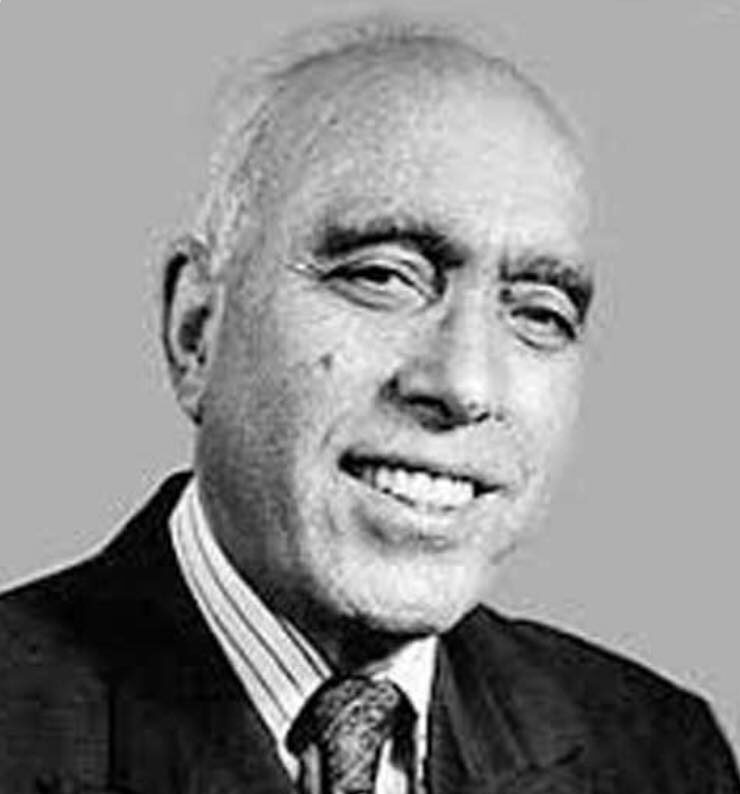
A Reformist With a Vision
By Mushtaq Bala
Begum Khalida Shah Pays Glowing Tributes to Sher-e-Kashmir on His 43rd Death Anniversary

Srinagar, Sept 8: On the 43rd death anniversary of Sher-e-Kashmir Sheikh Mohammad Abdullah, Awami National Conference (ANC) President and his eldest daughter, Begum Khalida Shah, paid rich tributes to the towering leader, hailing his lifelong struggle for the dignity and rights of the people of Jammu & Kashmir.
Recalling her father’s sacrifices, Begum Khalida Shah said Sher-e-Kashmir was more than a political leader, he was a father figure who devoted every moment of his life to upliftment, education, and empowerment of his people.
“As his daughter, I witnessed his tireless sacrifices, his suffering, and his unwavering resolve to see his people live with dignity and honor,” she remarked.
Sher-e-Kashmir, who passed away on September 8, 1982, left behind what she described as a timeless legacy of courage, resilience, and unflinching commitment to the oppressed and downtrodden.
“His mission was never about power, but about awakening political consciousness, uniting the people and giving them a voice that could never be silenced. That legacy belongs to every Kashmiri and will remain eternal,” she said.
Emphasizing that the greatest tribute to Sher-e-Kashmir is to uphold his principles of justice, secularism, equality, and service to humanity, Begum Khalida Shah called upon the youth of Jammu & Kashmir to carry forward his vision with courage and determination.
“His life’s message was clear, to live with dignity, to stand for truth and to remain steadfast in the service of people,” she stressed.
Concluding her tribute, Begum Khalida Shah expressed pride in being his daughter while reaffirming her party’s commitment to his ideals.
“As President of the ANC, I pledge that our party shall continue to walk the path he showed us and remain committed to safeguarding the honor and aspirations of the people of Jammu & Kashmir,” she said.
Sheikh Mohammad Abdullah, the Sher-e-Kashmir, remains one of the most defining figures in the modern history of Jammu and Kashmir. He was not merely a political leader but a reformer whose ideas touched the very soul of Kashmiri society. His vision was rooted in justice, dignity, and empowerment, aiming to liberate people from centuries of social and economic oppression.
“Justice is not charity; it is the right of the people.” – Sheikh Mohammad Abdullah
Land to the Tiller: Breaking the Chains of Feudalism
The land reforms of the 1950s under Sheikh Abdullah’s leadership changed the course of Kashmir’s history. His bold policy of land to the tiller without compensation struck at the very heart of feudal structures. For countless peasants, landownership brought dignity and independence.
This reform was not just about redistributing land; it was about redistributing hope. It ended the exploitation of farmers and laid the groundwork for a more equitable society.
“No man should till the land for another.”
Education as Liberation
For Sheikh Abdullah, education was the truest form of liberation. Schools were built, access was widened, and a new generation of literate Kashmiris began to emerge from the villages. He firmly believed that an educated society could resist oppression and carve its own destiny.
The rise of an educated middle class in Kashmir today owes much to the seeds planted during his tenure.
Healthcare and Human Development
Sheikh Abdullah’s vision of human development extended beyond economics and education. He believed in public health as a state responsibility, expanding hospitals, dispensaries, and basic healthcare facilities. Though modest in scale at the time, these initiatives marked a radical departure from neglect to social welfare governance.
Awakening Identity and Political Consciousness
Perhaps the most lasting part of Sheikh Abdullah’s legacy lies in the political awakening he inspired. He gave Kashmiris a sense of identity, dignity, and voice. His leadership nurtured self-respect, fostering a political consciousness that shaped modern Kashmiri society.
The Enduring Legacy
Decades after his passing, Sheikh Abdullah’s influence continues to ripple through Kashmir’s socio-political fabric. Land in the hands of peasants, a thriving educated class, and the acceptance of welfare as a duty of the state—these are not just policies but pillars of a modern Kashmir that he helped to build.
 Key Contributions of Sheikh Mohammad Abdullah
• Land Reforms (1950s): “Land to the Tiller” policy abolished landlordism and empowered peasants with ownership rights.
• Educational Expansion: Established schools and promoted universal education, especially in rural Kashmir.
• Healthcare Initiatives: Expanded hospitals, rural dispensaries, and made healthcare a public responsibility.
• Political Awakening: Gave Kashmiris a sense of dignity, self-respect, and identity on the socio-political map.
• Social Justice: Advocated equality, breaking feudal hierarchies, and ensuring rights for the marginalized.
• Human Development: Laid the foundations for an educated middle class and welfare-oriented governance.
His life’s work remains a reminder that transformative leadership is not about ruling—it is about reshaping society.
Nyla Ali khan writes;
In an interview, my maternal grandfather, Sheikh Mohammad Abdullah was asked about August 9, 1953.
Q. “I have heard that you were going to declare Kashmir completely independent from India on August 21, 1953, but that before you could do so, you were arrested on August 9. Is this true?”
A. “My arrest on August 9, 1953, was based on my differences with the Government of India—differences which had existed for some time. The Indian government was going back on promises made to me and the people of Kashmir. My contention was that if the government went back on its promises it would mean a loss of prestige to Delhi and to me.
I even said that if these promises were not fulfilled, the prestige and reputation of Pandit Nehru would be affected, and India’s position in the eyes of other nations would be diminished. I issued a warning to India, but nobody paid any heed, and my opponents quickly came out in the open.
The night of August 9 was very cold. I was staying at the government guest house in Gulmarg while on tour. My wife and children were with me along with my secretary and other staff.
At about four o’ clock in the morning, my secretary awakened me and informed me that the Dak Bungalow was surrounded by armed military police. I came out of my bedroom and saw a police superintendent whom I knew personally.
I asked him what authority he had to come to the rest house in the middle of the night. Instead of replying, he showed me the warrant for my arrest and pointed toward the soldiers armed with machine guns.
I asked him to allow me time to finish my morning prayers, and he agreed.
I had just finished my prayers when Maharaja Karan Singh’s ADC delivered a letter to me from the Maharaja offering his sympathies on my arrest.
The letter also conveyed a notice of my dismissal as Prime Minister. Attached to the letter was another document signed by Bakshi Ghulam Mohammad, Shyam Lal Saraf, and Girdhari Lal Dogra, indicating that they all had lost confidence in my leadership.
After reading the letter, I said to myself that the Maharaja had no authority to dismiss me and my ministry. At about 4:20 am, I bade goodbye to my wife and children and moved under a military escort to Udhampur, about 175 miles from Gulmarg.
I was imprisoned in a house belonging to the ruler of Kashmir, and all my communication with the outside world came to an end.
After a few days, I learned that my house in Srinagar had been sealed, and my wife and children were not permitted to stay there.
My family was helpless and had no one to turn to. People were so afraid of the regime in Kashmir that they were reluctant to give their houses on rent to my children.
For some time the members of my family stayed with a relative, Khwaja Ali Shah, but then, fortunately, a Hindu, Madan Lal, came to my family’s rescue, and in spite of the coercive measures of the government, he extended a hand of friendship to my wife and children by offering them a portion of his house. Later, my wife was offered an allowance by the government, but she refused to accept it.”


Sohail Iqbal Writes; Today on the 43rd death anniversary is Sheikh Sahib, I am ruefully reflecting whether the vicissitudes of time shall be generous enough to lend us one more, if not alike, but similar to him !
Ahmed Khan Writes;
An encounter with Sheikh Abdullah.
While death anniversary of Kashmir’s tallest leader, Sheikh Abdullah,is being observed, I was reminded of my first brush with him when I was struggling & looking for a job.
I was stringing for Nehru family Newspaper- National Herald & the Sheikh- Indira ACCORD was round the corner. Like any news reporter I was on lookout for a scoop & only way I thought I could get it was to get a breaking news on ACCORD from Sheikh Sb.
An interview was fixed with the leader. I made all preparations & fixed a recording equipment in his sitting room to ensure authenticity. When Sheikh Sb entered the room & noticed the equipment, he lost his cool & ordered me out of room suspecting that equipment may have been planted by intelligence Agency IB.I came out of room to escape the Sheikh’s wrath & came across late Shamim Ahmad Shamim, MP coming in. I briefed him on the incident & he persuaded Sheikh Sb to grant the interview. The Sheikh agreed & venue was shifted to his garden outside & Sheikh sb broke the news of having reached the ACCORD with P.M Mrs Gandhi.
I reported the interview which was picked up by other media all over.
This was how I got my first SCOOP which every reporter wants to get in his/her carrier.( RIP)

