

By Shereen Naman
Above Dal Lake in Srinagar sits a small Mughal garden called Chashma Shahi—“the Royal Spring.” It is the smallest of the city’s three famous Mughal gardens, far more modest than Shalimar and Nishat nearby. Unlike those expansive gardens, Chashma Shahi is built around a single natural spring rather than grand fountains or cascading water channels.
The Mughal Origins
The garden was laid out in 1632 on the orders of the Mughal Emperor Shah Jahan, with the actual construction carried out by his governor, Ali Mardan Khan. It was built as a gift for Shah Jahan’s eldest son, Dara Shikoh.
The spring itself predates the garden. Kashmiri tradition holds that it was discovered and named earlier by the saint Rupa Bhawani and that the site was originally known as Chashme Sahibi, after her family name, before becoming associated with the Mughal court and acquiring the name Chashma Shahi.
Locally, the spring’s water has long been believed to possess digestive and medicinal qualities. This reputation contributed significantly to the site’s emergence as a place of royal patronage rather than merely another garden in the Valley.
Dara Shikoh, for whom the garden was built, later studied at the nearby Pari Mahal. A scholar and mystic with a deep interest in comparative religion, he was eventually executed by his brother Aurangzeb during the Mughal war of succession.
Nehru’s Connection to the Spring

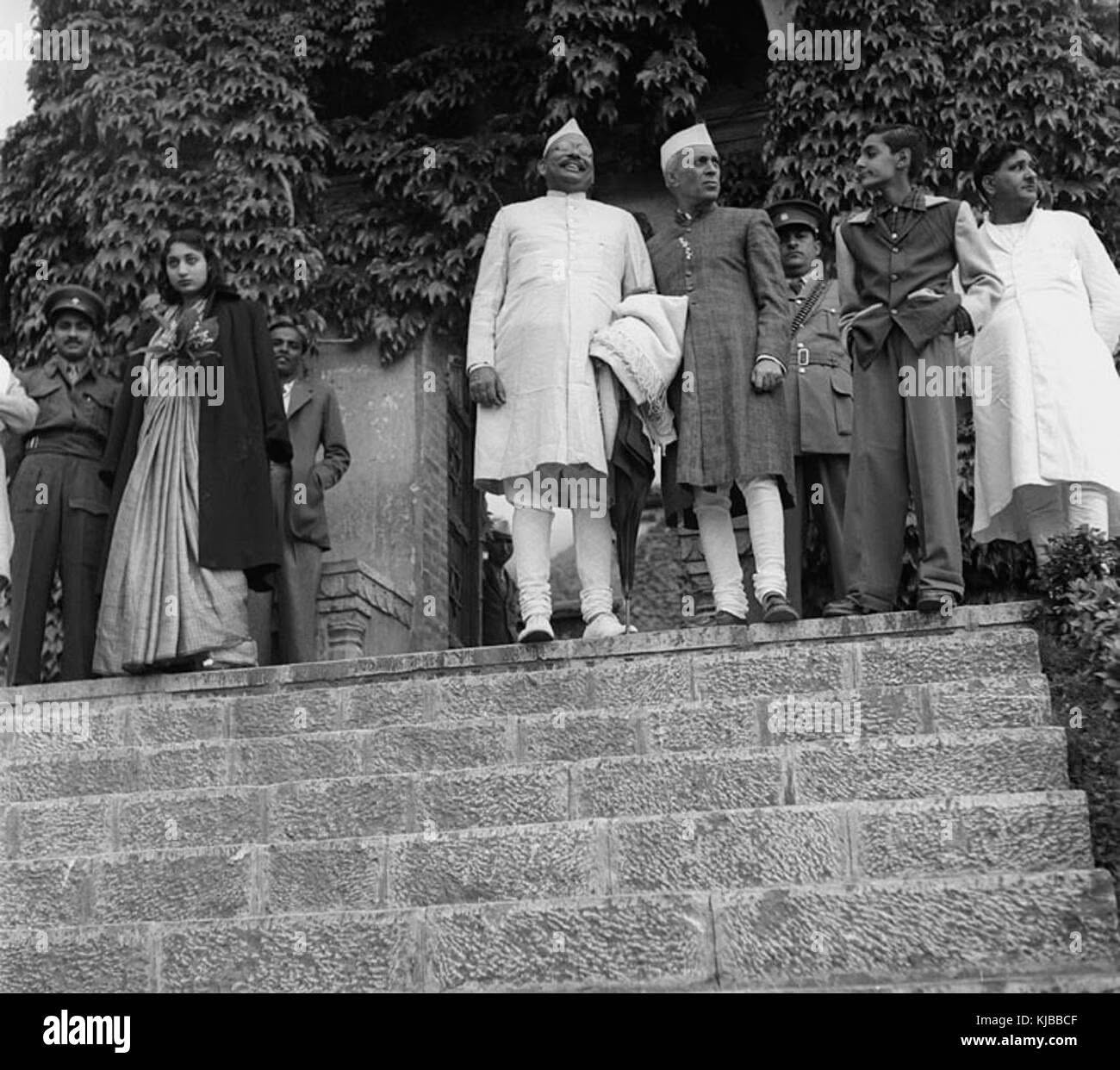
Centuries later, Jawaharlal Nehru, independent India’s first Prime Minister, maintained a deep personal attachment to Kashmir, where he spent part of his childhood and to which he returned frequently throughout his life. According to accounts of his personal habits, Nehru regularly had water from the Chashma Shahi spring transported to him in Delhi.
Unlike Shah Jahan’s creation of the garden, this connection was neither an official project nor a state initiative. It reflected a personal preference for the water of one particular spring, renowned for its purity and taste.
Historical Records
The garden’s construction date survives through a chronogram believed to have been inscribed at the site. The phrase Kausar-i-Shahi, an alternative name for the spring, yields the Islamic year 1042 AH when its letters are calculated according to the Persian abjad numeral system. This corresponds to 1632 CE, the year historians recognize as the completion date of the garden.
The garden’s establishment also forms part of the official Mughal historical record. Abdul Hamid Lahori, the court historian who chronicled Shah Jahan’s reign in the Badshahnama, documented several of Kashmir’s Mughal gardens that were laid out around lakes, springs, and foothills. Chashma Shahi remains among those historic gardens that have survived largely intact, alongside Shalimar, Nishat, Pari Mahal, Verinag, and Achabal.
Nehru’s association with the spring is similarly recorded in official sources rather than existing solely as local folklore. Government tourism documentation for Srinagar district notes that water from the spring was routinely transported to him in Delhi during his tenure as Prime Minister.
The Garden Today
Today, Chashma Shahi remains open to visitors as an integral part of Srinagar’s celebrated Mughal Gardens circuit. Its three terraced levels, aqueduct, fountains, and water channels continue to retain much of their original character.
One travel writer described the garden as architecturally the most charming among Srinagar’s Mughal gardens despite being the smallest. The spring continues to flow as it has for centuries, and visitors still commonly fill bottles with its water, preserving a tradition that connects the site’s Mughal past with its living present.
From Dara Shikoh’s contemplative visits to Nehru’s enduring fondness for its waters, Chashma Shahi remains more than a garden. It is a place where history, legend, spirituality, and memory continue to meet around a single spring whose waters have flowed uninterrupted through the centuries.
See less

