

By: Shahnawaz Nazir
The World Our Children Will Inherit
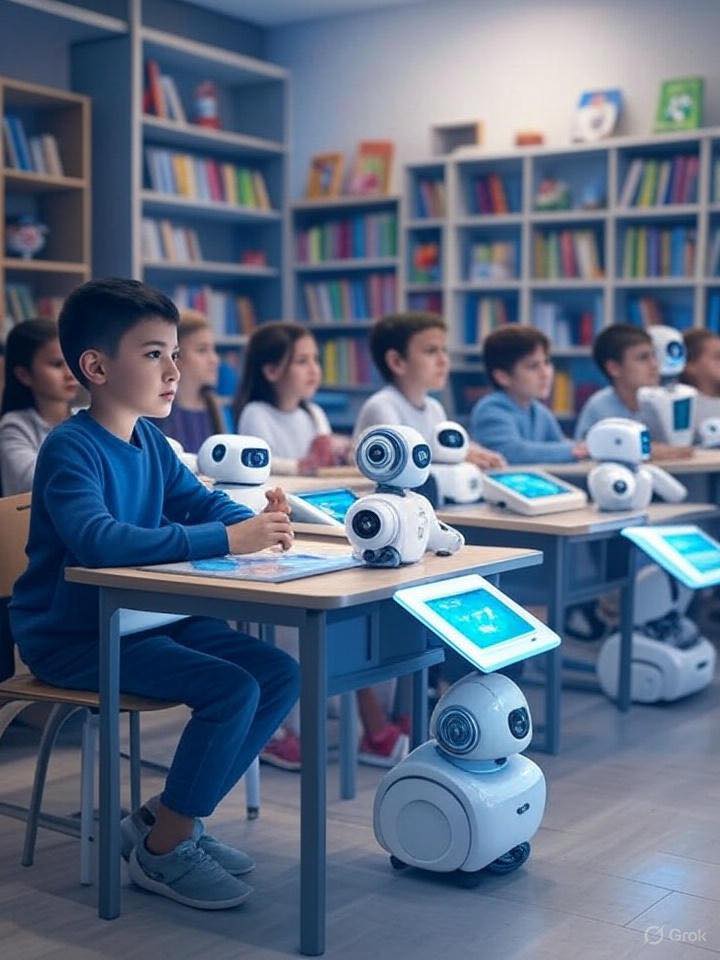
When we think about the future of our children, one truth stands clear: they are not preparing for our world, they are preparing for a world transformed by Artificial Intelligence (AI), robotics, and automation.
A child who is 7 years old today will step into the professional world around 2040–2045. By then, much of what we consider “modern jobs” may either not exist or may look entirely different. Just as the industrial revolution replaced blacksmiths with machinists and the internet age replaced typists with programmers, the AI revolution will reshape the employment landscape in ways we are only beginning to imagine.
The question for parents, teachers, and policymakers is urgent: what should children learn today to thrive tomorrow?
The Future of Work in the Age of AI
AI is advancing at a breathtaking pace. Machines can already translate languages, generate art, write software, analyze legal documents, and even diagnose diseases. In the next two decades, routine jobs—whether manual or intellectual—will likely be automated.
Data entry clerks, telemarketers, basic accountants, and even certain roles in medicine or law may shrink. On the other hand, professions such as AI trainers, robotics engineers, cybersecurity experts, and creative innovators will be in demand.
The dividing line of future employment will not be between “white collar” and “blue collar” jobs, but between those that are repetitive and predictable (done by machines) and those that are creative, ethical, relational, and deeply human (done by people).
The Skills That Will Never Go Out of Style
No matter how advanced AI becomes, there are core human skills that machines cannot fully replicate. Mathematics and logical reasoning will remain the backbone of all sciences, enabling children to understand and guide AI systems. Critical thinking—the ability to question assumptions and make sound judgments—will be essential for ethical decision-making in a machine-driven world.
Creativity and imagination will distinguish humans from algorithms, giving art, innovation, and storytelling their depth and soul. Equally important will be communication and emotional intelligence, for the leaders of tomorrow will not just code, they will connect. They will inspire, empathize, and collaborate across cultures and communities.
Technical Skills for the AI Era
Alongside these timeless qualities, children must also learn the languages of technology. Coding should become as natural as reading and writing—first through playful platforms in early years and later through powerful languages like Python and JavaScript.
By the time today’s children reach university, AI literacy will be as fundamental as mathematics. Understanding algorithms, neural networks, and machine learning basics will not just be for engineers, but for decision-makers in every field. Equally vital will be data literacy, the ability to interpret and question data, and cybersecurity skills to safeguard identity and privacy in a digital-first world.
The physical side of technology—robotics and automation—will also enter homes, workplaces, and cities. Children must be prepared not just to use machines but to design, control, and work alongside them.
Human-Centered Education: The Balance of Heart and Mind
In the rush to teach technology, we must not forget the values that make us human. The most successful people in the AI age will be those who balance intellect with empathy.
Philosophy and ethics will equip children to answer profound questions about fairness, justice, and accountability in a world where algorithms make decisions. Psychology and sociology will deepen their understanding of human behavior, relationships, and social responsibility. Leadership and teamwork will prepare them to thrive in collaborative environments rather than working in isolation.
A Roadmap for Children in the AI Era
Imagine the journey of a 7-year-old today. In the early years, the focus should be on foundations—literacy, numeracy, curiosity, empathy, and playful introductions to coding. Between 11 and 14, children should explore deeper mathematics, beginner programming, and digital citizenship while nurturing creativity in art, music, and writing.
By the age of 15 to 18, their education should blend technical mastery with ethics and philosophy. They should experiment with projects, internships, and problem-solving in real-world settings. And as young adults between 19 and 22, they should specialize in chosen fields, participate in global research opportunities, and develop leadership and entrepreneurial skills.
Such a child will not just be ready for the jobs of 2040—they will be equipped to create the jobs of 2040.
How Long Will Data Science Jobs Remain Relevant?
Data science will remain crucial for at least the next two decades, though its nature will evolve. Simple tasks such as basic analysis will likely be automated. But complex roles requiring human oversight—like AI model interpretation, ethical governance, and strategic decision-making—will persist.
The “data entry worker” of today may disappear, but the “AI ethicist and data strategist” of tomorrow will rise.
The Role of Parents and Teachers
Parents often wonder whether they should focus more on technology or values. The answer is both. Children need the skills to master technology but also the wisdom to use it responsibly.
Expose them to coding, but also to poetry. Teach them logic, but also compassion. Encourage innovation, but also empathy. A truly future-ready child will not just be a skilled worker, but a balanced human being.
Conclusion: Preparing for a Human-AI Partnership
The AI age will not eliminate human work—it will transform it. The children of today will not compete with machines; they will collaborate with them. Success will belong to those who can combine the precision of AI with the wisdom of humanity.
Parents, teachers, and policymakers share a sacred responsibility: to prepare children not just for jobs, but for meaningful lives. A world where AI may build the tools, but only humans can decide their purpose.
The best gift we can give our children is not just education, but the right education—an education that blends mathematics with music, coding with creativity, technology with philosophy, and intelligence with empathy.
Because in the end, the future does not belong to AI. It belongs to those who know how to remain beautifully human in the age of machines.
The author can be reached at;
7889820373
nawazrather786@gmail.com

