

Analytica Desk by Yassir Ahmed
New Delhi, India .
There is a moment in every nation’s story when the camera begins to do what the pen and the pulpit once did — create the version of history a people are meant to believe in. India, one of the world’s oldest civilizations and its largest democracy, has arrived at that moment once again.
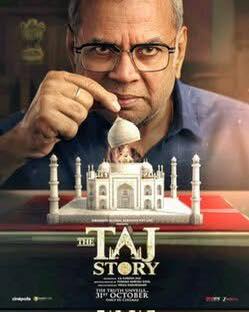
A new film titled Taj Mahal claims that the marble mausoleum — the crown jewel of Mughal architecture and one of humanity’s most recognized monuments — was once the site of a Hindu temple. The suggestion is not new. It echoes decades of whispers in India’s culture wars: that Islamic rulers did not build, but borrowed, from the sacred geography of Hinduism. What is new is the way this idea is being packaged — not as a scholarly hypothesis, but as a cinematic assertion.
It sounds like cinema. It is, instead, a calculated act of politics.
The Architecture of a Narrative:
The Taj Mahal has always been more than a building. It is a metaphor for love, for loss, for empire, and for the aesthetic syncretism that defined India’s golden centuries. Shah Jahan’s white marble mausoleum, built for his beloved Mumtaz Mahal, fused Persian geometry with Indian motifs. Its arches and inlay work symbolized the confluence of cultures that once made the subcontinent a crossroad of civilizations.
To recast that story — to replace it with a tale of appropriation and religious grievance — is to attempt a rewriting of the very identity India projects to the world. The controversy around Taj Mahal is not about stone or sculpture; it is about narrative sovereignty.
Once, the historian’s archive was the battlefield of memory. Today, it is the movie screen. And increasingly, the algorithm.
The New Arsenal: Cinema as Soft Power:
Throughout modern history, film has been the most potent weapon of persuasion short of war. In the 20th century, Hollywood taught the world how to dream American dreams — how to see freedom as a cowboy, heroism as a Marine, and love as a Manhattan skyline. The Soviet Union countered with its own cinematic mythology — of proletarian struggle and revolutionary virtue.
India, too, discovered the power of film early on. Bollywood’s technicolor romanticism once united a multilingual nation more effectively than any political speech could. Its songs transcended religion and region. But as politics hardened, cinema followed.
In the past decade, the line between national pride and national narrative has blurred. Films like The Kashmir Files and The Kerala Story became not just entertainment but instruments of ideological mobilization. They drew their power not from historical accuracy but from emotional plausibility — that dangerous space where belief feels like truth. Taj Mahal is the latest entry in that genre: cultural revisionism marketed as rediscovery.
Revisionism in Pop Culture:
Historical revisionism is not new. Every generation reinterprets the past to make sense of the present. But what we are witnessing today is not reinterpretation — it is reinvention.
In India, archaeology has long been a contested field. Excavations have often been expected to deliver proof that aligns with politics. Whether it is Ayodhya, Mathura, or now Agra, the trowel is asked to testify. When archaeology fails to confirm belief, cinema steps in to simulate it.
Film provides what excavation cannot — imagery. A visual memory. The marble walls of the Taj Mahal can be digitally peeled back to reveal a temple that may never have existed, but once the image appears on screen, it begins to live in the mind as plausible. That is the alchemy of visual culture: what is seen feels more real than what is written.
And once an algorithm amplifies it, the image becomes inescapable.
The Algorithm of Outrage
You watch one clip. Your feed floods with hundreds more. The same talking points, the same scenes, the same “evidence.” The algorithm is not ideological — it is opportunistic. It feeds on engagement, not accuracy. Outrage is more clickable than nuance.
In the past, propaganda needed a ministry. Today, it needs only metadata.
When a film like Taj Mahal releases, its publicity cycle is not driven by posters but by polarization. The controversy is the marketing. YouTube channels dissect the film, influencers debate it, and AI-edited reels circulate alleged “proofs” that predate the movie itself.
Fiction begins to trend as fact.
The shift is profound. History used to be written by the victors. Now, it is written by view counts.
Digital Nationalism:
This phenomenon is not uniquely Indian. Across the world, digital nationalism is reshaping collective memory. In the United States, culture wars over monuments and textbooks mirror India’s own anxieties. In Turkey, President Erdoğan’s cinematic empire has revived Ottoman nostalgia. In China, state-approved epics turn every historical triumph into validation of the Party’s eternal destiny.
What unites these movements is their use of media as a multiplier of myth.
In India’s case, digital nationalism operates through two parallel systems — one emotional, one algorithmic. The emotional system appeals to grievance: that Hindu civilization was wronged by centuries of Muslim rule and Western scholarship. The algorithmic system rewards repetition: the more you engage with that grievance, the more it reappears.
The result is a feedback loop where politics, platforms, and popular culture converge into a single narrative ecosystem.
The Myth of the ‘Hidden Temple’ :
The claim that the Taj Mahal was once a Hindu temple has circulated for decades, promoted by a handful of fringe historians and nationalist activists. The theory was long dismissed by mainstream scholars, both Indian and international, who pointed to Mughal records, architectural evidence, and Persian inscriptions identifying Shah Jahan as the builder.
Yet, in the current climate, fringe becomes mainstream through exposure, not evidence.
When political rhetoric validates pseudo-history, cinematic storytelling amplifies it, and algorithms distribute it — truth becomes negotiable.
This is how myth migrates into memory.
A new generation may grow up believing that the Taj Mahal’s white domes once echoed with Sanskrit chants rather than the call to prayer. And they will believe it not because they read it, but because they saw it — in high definition, with orchestral music, and emotional lighting.
Cinema as Cognitive Warfare:
The term information warfare is often associated with cyberattacks and fake news. But the deeper battle is for the human mind — for its ability to distinguish between information and imagination.
In that sense, Taj Mahal is not just a film. It is a psychological operation executed through storytelling. Soft power can be as subversive as hard power. A missile destroys territory; a movie reconfigures identity.
The danger is subtle: when citizens begin to believe they are “rediscovering” their past, they are less likely to question who is scripting that discovery. They become both the audience and the instrument of ideological dissemination.
The state, meanwhile, maintains plausible deniability. It can claim that art is free, that filmmakers have the right to interpret history. And technically, they do. But when certain interpretations are celebrated and others suppressed, freedom becomes selective.
From Ayodhya to Agra: The Continuum of Cultural Politics :
The Taj Mahal controversy is the cultural sequel to Ayodhya.
The demolition of the Babri Masjid in 1992 marked the collision of mythology and modernity. The temple movement was built on belief — that a mosque stood where the Hindu god Ram was born. Courts and committees were asked to verify faith through archaeology. The eventual verdict favored belief over evidence, setting a precedent: that religious sentiment could overrule empirical fact.
Today, Taj Mahal extends that logic from politics to pop culture. It does not need a courtroom. It has a camera.
And unlike the physical destruction of Babri Masjid, the cinematic rewriting of the Taj Mahal leaves no rubble — only pixels and persuasion.
The Global Context: Hollywood’s Selective Storytelling :
India’s new cinematic nationalism mirrors a global trend. Hollywood, too, has practiced selective storytelling for over a century — often erasing the complexity of foreign cultures to fit American self-image. The Vietnam War films of the 1980s portrayed trauma without context; Middle Eastern villains populated blockbusters long before 9/11; and superhero franchises continue to moralize geopolitics under the banner of entertainment.
The difference is that Hollywood’s distortions were often commercial; India’s are increasingly ideological.
Where American cinema sold dreams, Indian cinema today sells destiny.
The transformation of film from entertainment to instrument — from box office to ballot box — is one of the defining cultural shifts of the 21st century.
The Erosion of Objectivity:
When outrage sells, objectivity ends.
Social media rewards emotion, not evidence. The more polarized a topic, the higher its virality. The result is an economy of indignation, where users perform anger for engagement. Each retweet, share, and comment becomes a microtransaction in the market of misinformation.
Fact-checkers become the new heretics.
Meanwhile, filmmakers and politicians learn to exploit the cycle. A controversial claim is made; critics condemn it; defenders rally; the controversy itself becomes content. The line between fact and fiction dissolves, not because anyone deleted it, but because everyone monetized it.
The Paradox of Pride:
Every civilization seeks pride in its past. But pride built on distortion is fragile.
India’s real strength has always been its plurality — the ability to absorb, adapt, and reinterpret without erasing. The Taj Mahal, like India itself, is the product of fusion, not exclusion. To deny that is to deny the very creativity that made Indian civilization endure.
The irony is profound: in trying to reclaim a “pure” identity, revisionists risk sterilizing the very diversity that made India a mosaic rather than a monolith.
History, like art, thrives on nuance. Dogma kills both.
The New Historian: You
The democratization of information has created a paradoxical new figure — the amateur historian armed with hashtags.
You watch a video, feel moved, and share it. You become part of a digital chorus repeating a claim that feels ancient but is algorithmically new. The repetition itself creates credibility — the illusion of consensus.
In this new epistemology, virality equals validity. The danger is not merely that people believe falsehoods. It is that they begin to distrust truth itself. When everything is labeled propaganda, nothing remains sacred — not even fact.
The Silence of Institutions
In healthier democracies, cultural controversies are moderated by institutions — historians, media, universities. But when those institutions are weakened or co-opted, the vacuum is filled by spectacle.
In India, universities face political pressure; public broadcasters echo the government line; private media chases clicks; and social media platforms lack the will or nuance to mediate complex historical discourse.
Into that vacuum steps cinema — not as a mirror of society, but as a substitute for scholarship.
Memory as Battlefield:
Memory is the new frontier of power. Whoever controls what a people remember controls what they expect — and therefore, how they vote.
This is not merely cultural. It is strategic. Nations increasingly weaponize narratives as part of hybrid warfare — to influence societies without firing a shot.
The contest over the Taj Mahal’s story is, in that sense, part of a global struggle over epistemic sovereignty — the right to define what is true.
In the 20th century, the Cold War was fought over ideology. In the 21st, it is fought over information.
The Role of the Artist:
Art has always walked the line between truth and imagination. Great cinema interprets history; it does not impersonate it. The filmmaker’s task is to illuminate complexity, not exploit it. When cinema becomes a weapon, it loses its soul.
The great irony of Taj Mahal is that it desecrates what it claims to defend. By politicizing art, it turns culture into a casualty of ideology.
A Mirror, Not a Monument
The Taj Mahal has survived plunder, pollution, and time. It will survive this controversy, too. What may not survive, however, is our capacity to agree on what it means.
For centuries, travelers saw in its white marble the proof that love could outlast death. Today, some see it as proof that religion can outlast history.
Both are myths — one poetic, the other perilous.
The first united people in admiration; the second divides them in suspicion.
The difference lies not in the monument, but in the mirror we hold up to it.
Bottom Line :
So next time, before you share a new “historical truth” online, pause.
Ask who benefits from your belief. Ask who profits from your outrage. Ask whether the story you’re amplifying is written in evidence or engineered in engagement.
The algorithm may mislead you into thinking you are a historian. But history — real history — is not what trends. It is what endures.
The Taj Mahal will still stand when the servers crash, when the reels fade, when the outrage expires. Its silence will outlast our noise.
What we must decide is whether our memory will, too…
Analytica | Security. Strategy. Truth.
Independent geopolitical and defense analysis by Yassir Ahmed Mir.
© 2025 Analytica. All rights reserved.
Contact: authorrelations@analyticaa.us
Copyright © 2025 Analytica by Yassir Ahmed Mir. All rights reserved.
Content may not be reproduced, republished, or redistributed in any form without prior written permission from the author.
For permissions, rights, or syndication inquiries, contact authorrelations@analyticaa.us.
Disclaimer:
Analytica by Yassir Ahmed Mir is an independent research and analysis platform. All views expressed are those of the author, based on verified data, credible sources, and field-based reporting. The analysis does not represent the views of any government, institution, or organization. While accuracy is carefully ensured, some details may draw from evolving or declassified information.

