

By Shazia Shah | Kashmir Pen
Every year, April 22 is marked as Earth Day—a global reminder that this planet is not just our home, but a shared inheritance we hold in trust for future generations. In 2025, as the world confronts climate emergencies, biodiversity loss, and environmental injustice, Earth Day takes on an even deeper significance.
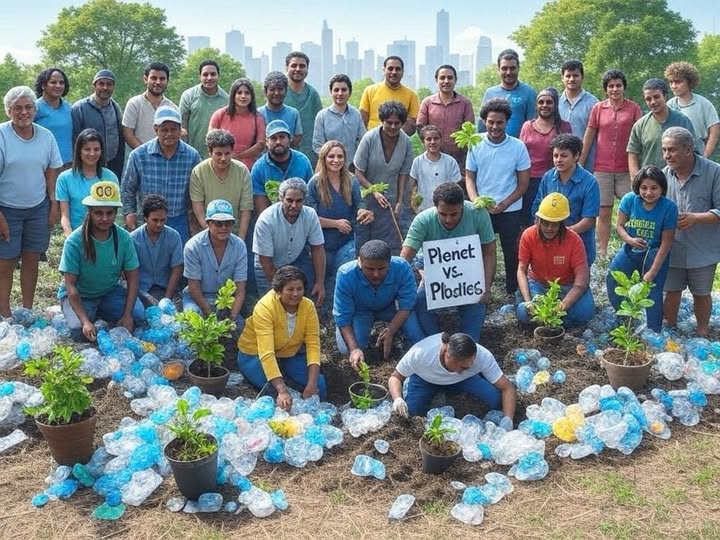
This year’s theme, “Planet vs. Plastics,” shines a spotlight on one of the gravest threats to our ecosystem: the overwhelming presence of plastics in our soil, seas, air, and bodies. But beyond the theme, Earth Day 2025 is also a call to rethinking our relationship with nature, our models of development, and our moral obligation to act—not tomorrow, but today.
The Origin of Earth Day: A People’s Movement
First celebrated in 1970 in the United States, Earth Day was born out of grassroots environmental activism. What began as a response to oil spills, air pollution, and water contamination quickly grew into a global movement. Today, Earth Day is observed by over 1 billion people across 190 countries, making it the largest civic observance in the world.
But what was once a day of awareness must now evolve into a day of accountability.
2025: A Critical Crossroads
This year’s Earth Day comes at a time when scientific reports paint a stark picture. The UN Intergovernmental Panel on Climate Change (IPCC) has warned that we are dangerously close to crossing the 1.5°C global warming threshold. Extreme weather events—cyclones, floods, droughts, and heatwaves—are no longer anomalies; they are becoming the norm.
Meanwhile, microplastics have been detected in everything from Antarctic snow to human bloodstreams. Marine life is choking, landfills are bursting, and the air we breathe is increasingly toxic.
The message is clear: Earth is sounding the alarm. Are we listening?
Beyond Tokenism: What Earth Day Should Mean
While tree-planting drives, clean-up campaigns, and awareness marches are important, they cannot be the end of our action. Earth Day 2025 must challenge individuals, corporations, and governments to go beyond symbolism:
• Policymakers must prioritize green laws, climate-resilient infrastructure, and invest in clean energy solutions.
• Corporations must adopt circular economies, reduce plastic production, and shift to sustainable packaging and supply chains.
• Communities must build local resilience, practice zero-waste living, and protect native ecosystems.
• Youth must be empowered as leaders of climate action, not just passive participants in climate anxiety.
Indigenous Wisdom & Sustainable Futures
As the world seeks solutions, it must also listen to indigenous and traditional knowledge systems that have lived in harmony with nature for centuries. In Kashmir, for instance, ancient water management systems, community forest protection, and reverence for the environment were once part of daily life. Earth Day is a reminder that the past holds keys to a more sustainable future.
A Spiritual and Moral Imperative
More than science or policy, Earth Day is a spiritual question: What kind of ancestors do we want to be? Do we leave behind a planet of profit and pollution, or a legacy of regeneration and respect?
Faith traditions across the world—from Islam and Hinduism to Christianity, Buddhism, and tribal beliefs—have long taught that nature is not a commodity, but a sacred trust. Earth Day 2025 is a call to revive that sacred ethic in a modern, material world.
Conclusion: The Earth Is Watching
As we observe Earth Day 2025, let it not be just another date on the calendar. Let it be a turning point—a day when we finally align our values with our actions.
Let us move from intention to impact, from apathy to urgency, and from exploitation to stewardship.
Because the Earth is not asking for charity—it is demanding justice.
⸻
“The Earth does not belong to us; we belong to the Earth.”
— Chief Seattle

