

By Mushtaq Bala
Jammu and Kashmir today stands at a defining crossroads—where aspiration meets accountability, and progress walks hand in hand with persistent challenges. The past week has offered a vivid snapshot of this evolving landscape, marked by achievements in sports, culture, governance, and public welfare, while also reminding us of the deeper structural and humanitarian concerns that demand urgent attention.
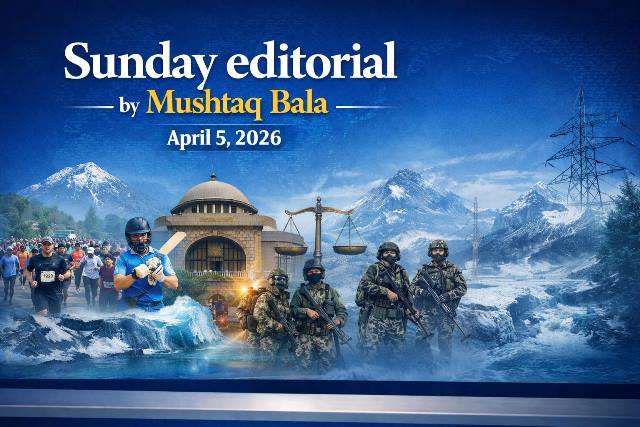
The image of Chief Minister Omar Abdullah participating in the Half Marathon and flagging off the Jammu Marathon is more than a ceremonial gesture. It reflects a symbolic shift—towards a healthier, more active society. This message finds resonance at the national level as well, with Prime Minister Narendra Modi highlighting Jammu and Kashmir’s emergence as a sporting hub and celebrating its historic Ranji Trophy triumph. Together, these developments signal a renewed emphasis on youth engagement, discipline, and global competitiveness.
Equally encouraging is the cultural vibrancy of the region. The staging of Doctor Faustus at IUST on World Theatre Day and the continued engagement of literary forums like the Fiction Writers Guild reaffirm that Kashmir’s intellectual and artistic spirit remains alive and resilient. Such platforms are essential—not only for creative expression but for preserving the soul of a society navigating rapid change.
On the governance front, the conclusion of the Budget Session and the passage of the Private Universities Bill point towards a legislative system in motion. The tabling of 33 private members’ bills reflects democratic participation, while key announcements—such as the proposed regularisation of nearly 55,000 daily wagers and the commitment to fill 25,000 vacancies—offer hope to thousands of families. Yet, these promises must translate into timely action. For many, employment is not just an economic issue—it is a matter of dignity and survival.
However, beneath these positive strides lie pressing concerns. The controversy surrounding the Ganderbal encounter, calls for judicial inquiry, and the Speaker’s caution on the grave security scenario highlight that peace remains fragile. The administration’s assurance of impartial probes must be matched by transparency and trust-building measures.
Environmental and civic challenges also demand immediate focus. Reports of the Jhelum deteriorating into a drain and the looming threat of glacial lake outburst floods (GLOFs) are stark reminders that ecological neglect can have irreversible consequences. Development cannot come at the cost of environmental sustainability.
Meanwhile, issues such as arbitrary fee hikes by private schools, rising power dues, illegal constructions in tourist zones, and the drug menace underscore gaps in regulation and enforcement. Governance must not only be proactive but also perceptibly fair and firm.
Encouragingly, initiatives in healthcare, infrastructure, and social welfare—from medical outreach programmes to transit accommodations for employees and preparations for the Amarnath Yatra—reflect a system striving to deliver. The administration’s emphasis on rehabilitation of terror-affected families and the safe return of Kashmiri Pandits is a reminder that reconciliation and healing must remain central to policy.
At a broader level, global tensions and their potential local impact cannot be ignored. Calls for international ceasefire and dialogue echo the universal longing for peace—something that Kashmir understands perhaps more deeply than most.
In conclusion, Jammu and Kashmir is undeniably moving forward—emerging stronger in sports, culture, and governance. Yet, the journey ahead requires balance: between growth and justice, development and sustainability, security and civil liberties. The true measure of progress will lie not in announcements, but in outcomes that touch every citizen’s life.
The road ahead is challenging—but with collective resolve, transparency, and inclusive vision, it is a journey that can lead to lasting peace and prosperity.
| Mushtaq Bala, Editor in chief Kashmir Pen

