

By Mushtaq Bala
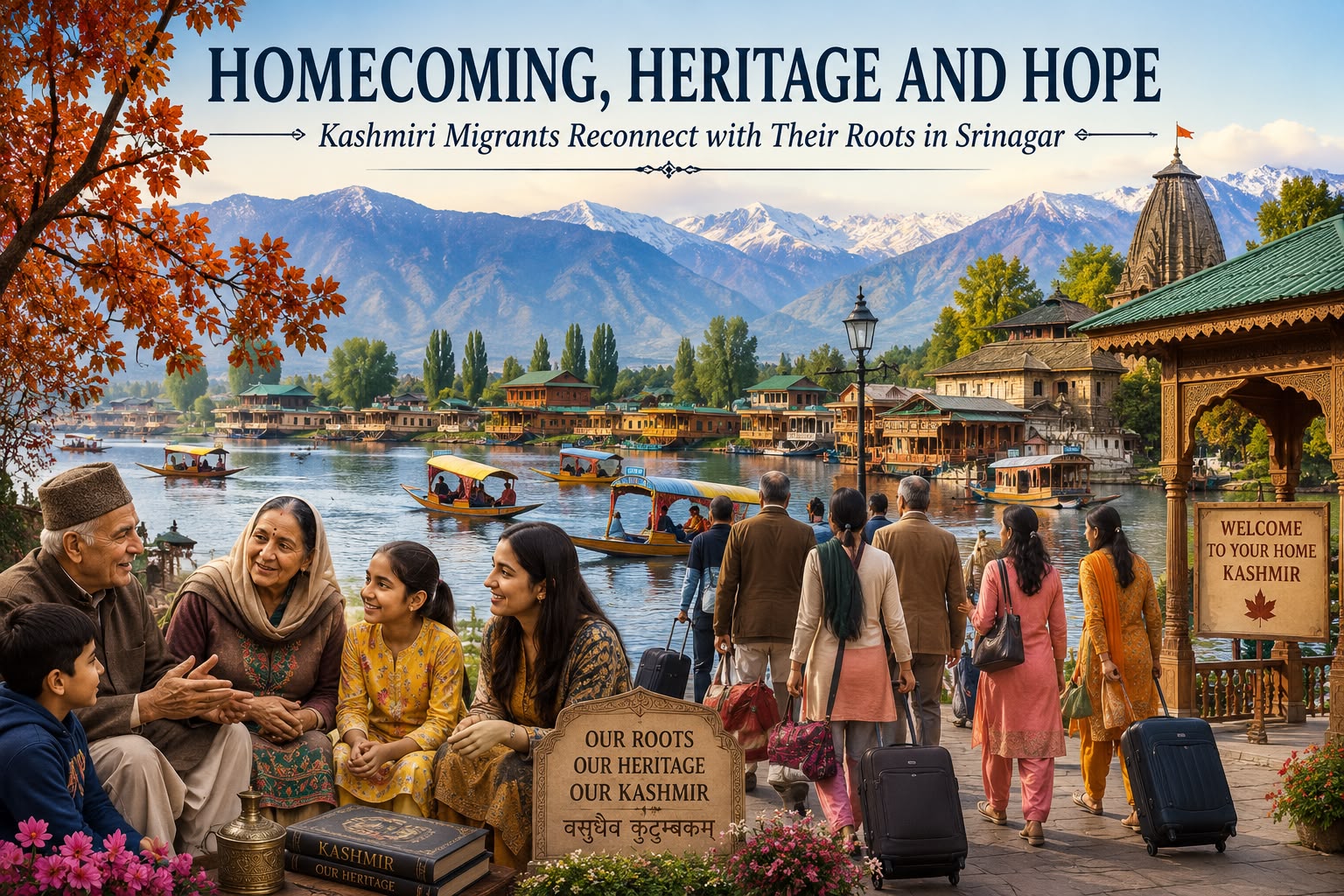
Srinagar 19 Jun : The recent two-day Global Kashmiri Pandit Conclave held in Srinagar marked a significant moment in the long and emotional journey of Kashmiri migrants, particularly members of the Kashmiri Pandit community who were displaced from the Valley during the turbulent years of the early 1990s. Bringing together participants from across India and several countries abroad, the conference served as a platform for reflection, dialogue, cultural reconnection and discussions on the future of the community in its ancestral homeland.
Held as part of the larger Global Kashmiri Pandit Heritage Tour and Conclave, the gathering witnessed the participation of community leaders, intellectuals, professionals, youth representatives and members of the diaspora. The event highlighted the enduring bond that migrants continue to share with Kashmir despite decades of displacement.
For many participants, the visit was not merely a conference but an emotional return to the land of their ancestors. Delegates visited heritage sites, temples and places associated with their cultural memory, reinforcing a sense of belonging that has survived years of exile. Speakers repeatedly emphasized that Kashmir remains central to the identity, history and collective consciousness of the community.
One of the major outcomes of the conference was the adoption of the “Praagaash Resolution,” which outlined a roadmap focusing on justice, rehabilitation, cultural preservation and a dignified return of Kashmiri migrants to the Valley. The resolution called for structured engagement with the government and measures aimed at addressing issues related to rehabilitation, security, cultural heritage and community participation in the region’s future development.
Addressing the conclave, Lieutenant Governor Manoj Sinha praised the resilience and achievements of the Kashmiri Pandit community and encouraged members of the diaspora to contribute to Jammu and Kashmir’s development by establishing educational, cultural and industrial institutions. He described such initiatives as a means of preserving heritage while creating opportunities for future generations.
The conference also underscored the importance of preserving Kashmir’s composite culture, often celebrated as a unique blend of traditions, spirituality and coexistence. Several speakers stressed that the return of migrants should not be viewed merely as a political or administrative issue but as a step towards restoring the Valley’s pluralistic social fabric and strengthening communal harmony.
A notable aspect of the gathering was the active participation of younger generations born outside Kashmir. Many expressed a desire to reconnect with their roots, learn the Kashmiri language, preserve cultural traditions and contribute to the revival of their ancestral homeland. Their presence demonstrated that despite decades of displacement, the emotional and cultural ties to Kashmir remain remarkably strong.
The conclave reflected both the pain of displacement and the optimism of renewal. While challenges relating to rehabilitation, employment, security and property issues remain subjects of discussion, the gathering conveyed a message of dialogue, reconciliation and constructive engagement. Participants expressed hope that sustained efforts by all stakeholders would help create conditions conducive to a dignified and voluntary return.
As Kashmir continues its journey towards peace and development, initiatives that foster dialogue between communities and reconnect migrants with their heritage hold special significance. The Srinagar conference demonstrated that beyond politics and policy debates lies a shared aspiration: preserving Kashmir’s rich cultural legacy while building a future founded on mutual respect, inclusion and hope.

