


By Dibang Mary
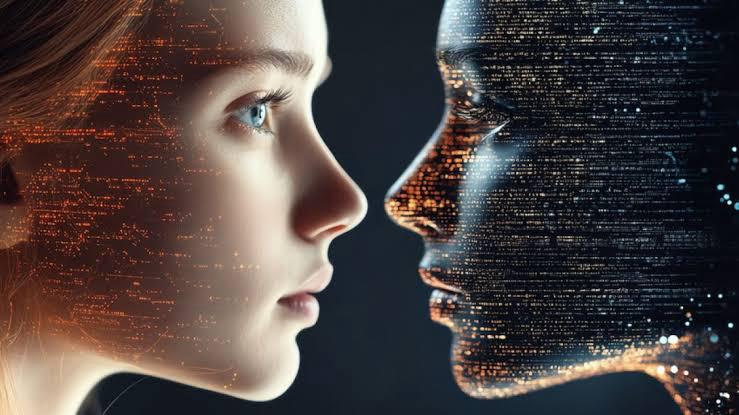
When we encounter ourselves in another, identity is not threatened but revealed. This essay
and story explore how resemblance can illuminate connection, awareness, and the layers of
being human.
The idea of a doppelgänger has fascinated humanity for centuries. Long before science offered
explanations, and long before technology could imitate us, people believed that somewhere
another self walked the world. similar in face, movement, or fate. In early folklore, this double
was often misunderstood as a warning or an omen. Today it is usually treated as coincidence or
curiosity. Yet the question it raises remains quietly profound: what truly makes us who we are?
At its core, the doppelgänger dance is not about resemblance, but about identity. If two people
can look alike, speak alike, or even think alike, then identity must be more than appearance. It
must live elsewhere, in memory, in intention, in lived experience.
Modern psychology reminds us that human beings are shaped by observation. We learn by
watching others, absorbing language, gestures, and values long before we are conscious of
doing so. Similar environments often produce similar people. Shared cultures produce shared
expressions. What appears as duplication is often the result of common influence rather than
loss of individuality.
Yet encountering one’s likeness carries emotional weight, whether literal or metaphorical.
Seeing yourself reflected in another person can feel disorienting because it challenges the
uniqueness we often cling to. We want to believe identity is singular and protected. But perhaps
identity is not weakened by resemblance. It is clarified by contrast.
Ancient philosophies offer a gentler understanding. Many traditions viewed the self as layered: a
private inner life, a social presence, and a deeper continuity shaped by ancestry and time. In
this view, the double is not a rival but a reminder that identity is expansive, not fragile.
In a world increasingly shaped by shared spaces and global conversation, the dance becomes
more relevant. We encounter echoes of ourselves in strangers, in stories, in ideas we did not
create but somehow recognize. The task is not to resist these reflections, but to ask what they
reveal.
The doppelgänger dance invites a shift in perspective. Instead of asking, “Am I being copied?”
we might ask, “What part of me is essential, and what part is shaped by the world?” In
answering that, we begin to understand that identity is not threatened by similarity. It is
strengthened by awareness.
On the third day of the conference, I saw her.
She was standing near the coffee station, holding a paper cup the way I always did, two hands
wrapped around it as if warmth could travel upward and settle the nerves. When she turned, the
resemblance was undeniable. Not exact, but close enough to pause the breath. The same brow.
The same quiet mouth that seemed always on the verge of a question.
We noticed each other at the same time.
There was no shock, no fear. Just recognition.
Later, by coincidence or design, we ended up seated side by side. We spoke carefully at first,
circling the obvious without naming it. When we finally laughed, the tension lifted.
“You get this a lot?” she asked.
“Not like this,” I said.
Our lives were different. She grew up by the sea; I grew up inland. She studied architecture; I
studied words. Yet our pauses matched. Our listening did too. We both waited a heartbeat
longer than necessary before responding, as if language deserved respect.
At the end of the day, we walked out together. Someone passing by glanced at us twice,
uncertain which of us they had already seen.
“I don’t think we’re copies,” she said suddenly.
“No,” I replied. “I think we’re evidence.”
“Of what?”
“That identity isn’t a single thread,” I said. “It’s a weaving.”
She smiled, and for a moment, the similarity faded. What remained was difference, her
cadence, her certainty, her way of moving forward without looking back.
We never exchanged numbers. We didn’t need to. The encounter had already done its work.
That night, alone in my room, I looked in the mirror and saw myself more clearly, not duplicated,
not diminished, but expanded. Meeting her had returned something I hadn’t known I misplaced.
The dance was never about which of us was real.
It was about realizing that being human has never meant being singular.
Dibang Mary is a Nigerian poet, author, and journalist whose work focuses on human emotion and social realities. Her writing combines clarity with literary depth and has been published in Brittle Paper, The Global Times, Kalahari Review, and Hello Poetry.
